English
Azərbaycan
Русский
49 ₼-dən pulsuz çatdırılma
Sifarişimi izlə
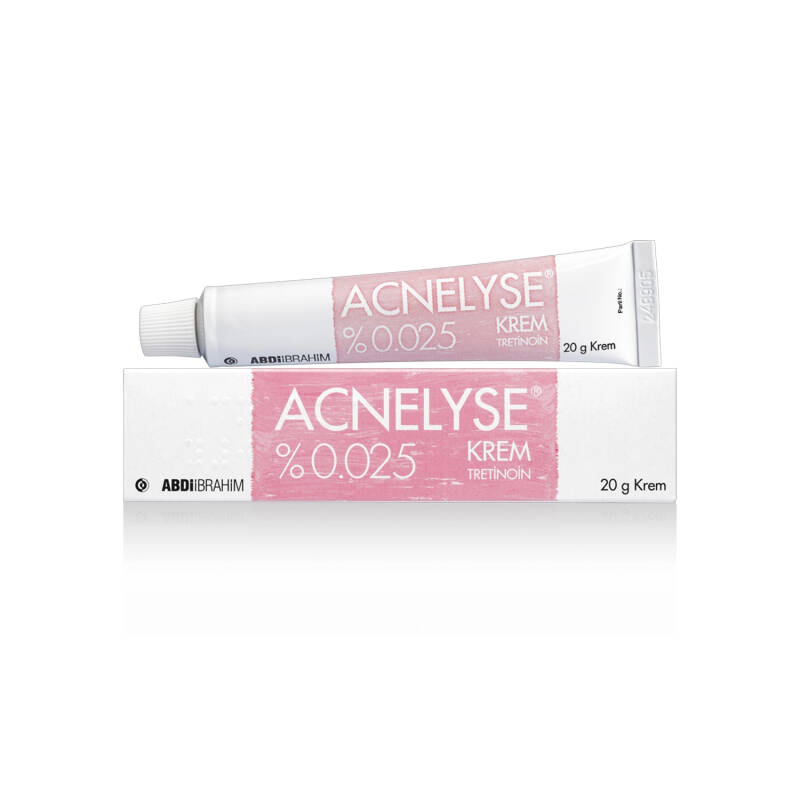
In 1 g of cream, there is 0.2875 mg of retinoic acid. Excipients: butyl hydroxytoluene (E321), white paraffin (vaseline), polysorbate 60, cetyl alcohol, methylparahydroxybenzoate (E218), propylparahydroxybenzoate (E216), propylene glycol, sorbitan stearate (span 60), stearyl alcohol, purified water. hypersensitivity to any of the excipients in the medicinal product, or to any of the excipients in the composition.
• Signs of skin damage. • Women with skin epithelioma or eczema with potential in personal or family history / Contraception Women with reproductive potential should determine whether they are pregnant by performing a pregnancy test before starting treatment; if pregnancy is present, treatment should be postponed until after pregnancy. It is recommended to protect against pregnancy during use with one or two reliable contraceptive methods. The medicinal product should not be used in women who are taking oral contraceptives that may reduce the concentration/effect of the drug, or in women planning pregnancy. Oral retinoids are associated with congenital anomalies when prescribed accordingly; topical retinoids usually cause less systemic effect because they are absorbed minimally through the skin, but individual factors that may increase systemic effect (e.g., a damaged skin barrier, excessive use) may occur.
If the medicinal product is prescribed and the patient becomes pregnant while using this medicinal product, treatment should be discontinued. Lactation It is not known whether orally administered retinoids and their metabolites pass into breast milk; therefore, this medicinal product should not be used in women during lactation. No information available.
No information available
Aknelis should be applied to the skin once daily, at night. If a temporary feeling of warmth and itching occurs on the skin after application, it is possible to stop treatment or adjust the dose to a level that the patient can tolerate by reducing the frequency of use. In the first weeks, an increase in inflammatory ulcers may be observed. This is related to the effect of the medicinal product on ulcers. If excessive irritation (redness, peeling, or discomfort) is observed, the frequency of use should be reduced and/or treatment should be temporarily discontinued. After reducing, it is necessary to resume the normal frequency of use. If it continues, treatment should be discontinued. Even if results are observed after 2–3 weeks, more than 6 weeks may be required to achieve complete improvement.
When improvement is observed in ulcers, the method of reducing the use of the medicinal product may be as follows: Aknelis should be applied in a thin layer to areas with well-dried, non-washed acne, and gently massaged with fingertips. After applying to the skin, wash your hands. Patients using the product may use cosmetics, but the skin should be thoroughly cleaned before applying the medicinal product. Special populations Kidney/liver impairment Is dose adjustment required? No information available about pediatric use.
In children and adolescents older than 12 years, it is recommended to determine the dose as in adults. ), rarely (≥1/1000 to <1/1000), very rarely (<1/10000), unknown (cannot be assessed based on available data). Disorders in the immune system EXA Rare: hypersensitivity reactions, including difficulty breathing, swelling of the face, tongue, and lips. Disorders in the system of hypersensitivity reactions. Often: headache.
Eye disorders Sometimes: eye irritation and disorders in the subcutaneous tissue. Very often: itching, rash, skin irritation, stinging sensation, skin pain: change in skin pigmentation (hypo-hyperpigmentation), skin irritation, sensitivity to light, erythema, itching, rash, dermatitis, dryness of the skin: flaking of the skin, swelling of the face, formation of watery fluid, change in skin color, burning sensation on the skin, photosensitivity reactions, etc.: itchy rash with diffuse erythema due to contact dermatitis. Rare: scar formation disorders. Sometimes: feeling of warmth.
When treatment is stopped or interrupted, the temporary irritation that occurs in the skin goes away on its own 3–5 days after discontinuation of tretinoin use.
Mechanism of action Tretinoin activates the three members of the nuclear receptors of retinoic acid (RAR) (RAR α, β, γ). This effect can lead to changes in gene expression, subsequent protein synthesis, and growth and differentiation of epithelial cells. These clinical effects include activation of retinoic acid receptors. Other mechanisms have not been demonstrated. Retinoic acid (tretinoin) in the product reduces adhesion of follicular epithelial cells and the formation of microcomedones. It also increases renewal of follicular epithelial cells and stimulates mitotic activity. Aknelis, prepared with a special gel base that is easily absorbed, has the following effects: It regulates blood circulation in the skin, narrows pores, strengthens skin tissue, stimulates production, and tightens and thins the upper layer of the skin.
They reduce melanin synthesis. This Aknelis is used in the treatment of acne (acne vulgaris) accompanied by comedones, papules, and pustules, and is shown as an auxiliary means to help remove small wrinkles on the face in people who follow a skin care complex and are protected from the effects of sunlight.
Azerba
If, alongside this, local treatment for acne is carried out, it is recommended to be cautious, because a cumulative irritant effect may develop and/or inflammation may occur in the skin; in such cases, the frequency of use should be reduced and/or treatment should be temporarily discontinued. After reduction, treatment should be resumed again. If it continues, treatment should be stopped. Due to the irritant properties of this product, it is recommended to avoid the use of all products that may cause local irritation as an astringent cosmetic (including perfumed and/or alcohol-containing products). Alongside treatment, cokinmok lo Special populations
Product Filters | ||
|---|---|---|
| Supplier Product Code | : | 111-30872 |
 Powered by
T-SOFT
E-Commerce
Powered by
T-SOFT
E-Commerce