English
Azərbaycan
Русский
49 ₼-dən pulsuz çatdırılma
Sifarişimi izlə
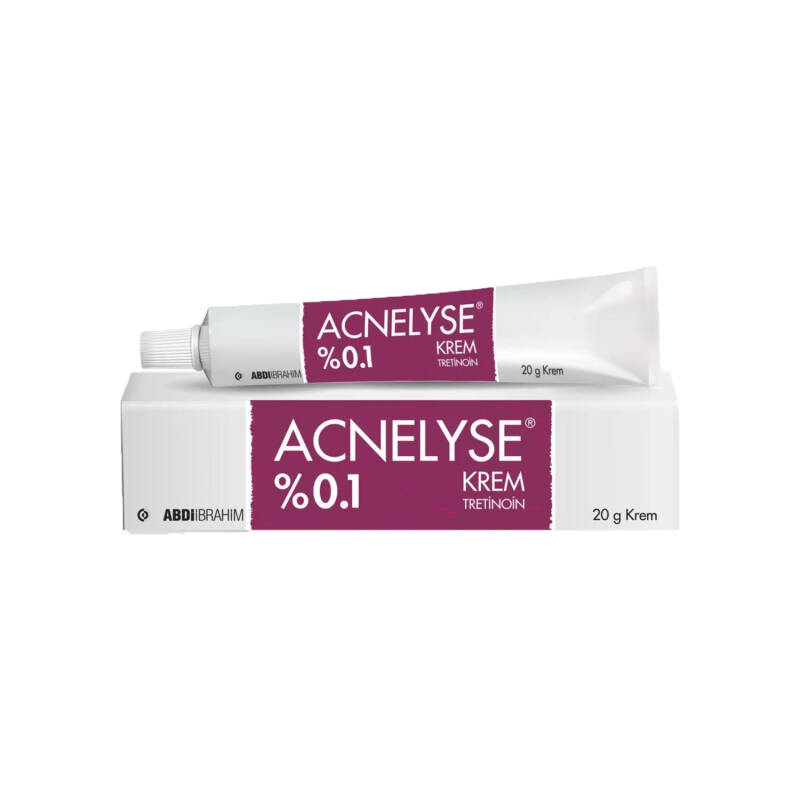
In 1 g of cream, 1.151 mg retinoic acid is present. Ingredients: butylhydroxytoluene (E321), petroleum jelly, polysorbate 60, cetyl alcohol, methylparaben, propylparaben, propylene glycol, span 60, stearyl alcohol, purified water. If you have high sensitivity to any of the active or auxiliary substances, the effect of tretinoin may decrease; therefore, it should not be used together with oxidizing substances such as benzoyl peroxide. If there is a possibility of using together, different times of the day should be assigned (morning benzoyl peroxide, evening Aknelis medicinal product contains only oral contraceptives (mini-pills) and may reduce them.
This medicinal product may cause an increase in topical penetration.
Aknelis medicinal product is used for the treatment of acne (acne vulgaris) accompanied by comedones, papules, and pustules. Contraindications: The medicinal product contains
(See the section). Women of reproductive potential / Contraception Women of reproductive potential should determine whether they are pregnant by performing a pregnancy test before starting treatment; if pregnancy is present, treatment should be postponed until pregnancy ends. During the treatment period, it is recommended to use one or two reliable contraceptive methods. This medicinal product is contraindicated in women who plan pregnancy or in whom oral contraceptives may reduce the level and/or effect. Oral retinoids are not associated with congenital malformations. During use, topical retinoids usually result in weak absorption through the skin and minimal systemic effects; however, individual factors that increase systemic effects (e.g., damage to the skin barrier, excessive use) may occur. If pregnancy occurs while using this medicinal product, treatment with Aknelis should be discontinued. Lactation Oral retinoids and their metabolites are known to pass into breast milk.
It is not known whether topical tretinoin passes into breast milk. It is known that oral tretinoin passes into breast milk. Therefore, Aknelis should not be prescribed to women during lactation. No information is available.
No information is available
Once daily, in the evening, when applied to the appropriate area of the skin, a temporary burning and itching sensation may occur. If this happens, it is possible to pause the use of the medicinal product or reduce the frequency of use, and adjust the dose to one that is well tolerated by the patient. In the first weeks, an increase in inflammatory ulcers may be observed. This is related to the effect of the product on ulcers. It is not necessary to stop using the product; however, if excessive irritation (redness, peeling, or discomfort) is reported, the frequency of use should be reduced and/or treatment should be temporarily discontinued. After the irritation decreases, normal frequency of use should be resumed. If it continues, treatment should be discontinued.
The result of treatment with the medicinal product is observed after 2–3 weeks, but to obtain full benefit, it may often take more than 6 weeks. After improvement is observed, the medicinal product may be used less frequently. The product should be applied in a thin layer to the problem skin area that has been washed and dried well, and gently massaged with fingertips. After use, wash your hands. During the course of treatment, patients may use cosmetic products, but the skin should be thoroughly cleaned before use. Populations: Renal/hepatic impairment. Dose adjustment is not required.
Pediatric population: There is no information about pediatric use. In children and adolescents older than 12 years, the use of appropriate doses for adults is recommended. In children younger than 12 years, the use of this medicinal product is not recommended. Dose adjustment is not required.
Tretinoin activates the nuclear receptors of retinoic acid (RAR) (RAR α, β, γ), thereby causing changes in gene expression, followed by protein synthesis, as well as changes in the growth of epithelial cells and differentiation. The mechanism of action of these clinical effects of tretinoin, including activation of retinoic acid receptors and other mechanisms, has not been fully determined. Retinoic acid (tretinoin) in the medicinal product reduces adhesion of follicular epithelial cells and the development of microcomedones, and also stimulates mitotic activity by increasing renewal of follicular epithelial cells. The effects of the product are shown below.
It regulates blood circulation in the skin, narrows pores, stimulates the production that strengthens skin tissue, smooths the skin, and reduces the production of thickening. It stimulates the mitosis process.
It reduces intercellular adhesion in the stratum corneum of the skin and fights hyperkeratosis.
It is intended only for topical use; oral or intravaginal use is not allowed. Local erythema and peeling of the skin may occur, and due to irritation at the application site, pain and dryness may develop. If irritation continues with the same intensity, patients should be advised to use the medicinal product less (reduce the number of applications). It is recommended to temporarily pause or completely stop using the product. Since it may result in edema and eczema due to intolerance, it should be applied to a smaller area of skin the first time. If a reaction or severe irritation occurs, treatment should be discontinued. R Azerbal aljan
When used alongside in the treatment of topical acne, caution is required so that cumulative irritant effects do not develop or inflammation does not occur in the skin. The frequency of use should be reduced and/or treatment should be temporarily discontinued. After reduction, treatment should be resumed. If it continues, treatment should be discontinued. Due to the irritant effect of this medicinal product, it is recommended to avoid all products that may cause local irritation, such as cosmetic products with astringent effects (including perfumed and/or alcohol-containing products). It is also necessary to avoid concomitant use. When used together with therapeutic soaps and cleansers, the drying effect of the medicinal product may increase.
The frequency of occurrence is grouped as follows: Very common (≥1/10), common (≥1/100–<1/10), sometimes (≥1/1000–<1/100), rare (≥1/10000–<1/1000), very rare (<1/10000), not known (frequency cannot be estimated based on available data). Disorders in the immune system: Very rarely: hypersensitivity reactions (including difficulty breathing, swelling of the face, lips, and tongue). Disorders in the skin and subcutaneous tissue: Very common: itching, rash, skin irritation, burning sensation, dry skin, erythema, peeling of the skin. Common: change in skin color (hypo- or hyperpigmentation), skin irritation, photosensitivity. Sometimes: contact dermatitis, rashes accompanied by diffuse erythema and itching. Very rare: temporary irritation of the skin may occur during use of the product; this condition disappears when treatment is stopped or when use is paused.
Additional side effects reported during topical use of tretinoin disappear 3–5 days after discontinuation of treatment. If you experience any side effects not mentioned in this leaflet, inform your doctor or pharmacist. Information about side effects arising during use should be reported to the Analytical Expertise Center (Address: AZ1065, Republic of Azerbaijan; Baku city, Jafar Jabbarli street, 34; Fax: (99412) 596-07-16; email: [email protected]; Tel.: (99412) 596-05-20 Hotline (99412) 596-07-12). By providing information about side effects, you help collect more information about the safety of this medicinal product.
Product Filters | ||
|---|---|---|
| Supplier Product Code | : | 111-04393 |
 Powered by
T-SOFT
E-Commerce
Powered by
T-SOFT
E-Commerce