English
Azərbaycan
Русский
49 ₼-dən pulsuz çatdırılma
Sifarişimi izlə
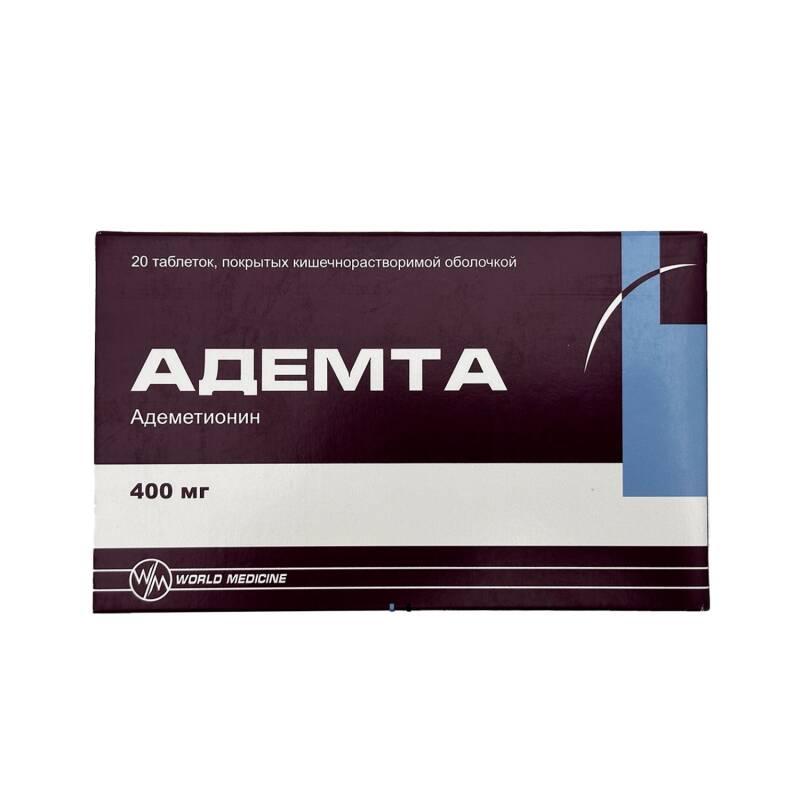
Active ingredient: 1 tablet contains 400 mg ademetionine (as ademetionine 1,4-butanedisulfonate). Excipients: microcrystalline cellulose, sodium starch glycolate, colloidal anhydrous silicon dioxide, magnesium stearate. Coating: yellow iron oxide, red iron oxide, Eudragit L-100-55, macrogol 6000, polysorbate 80, simethicone, sodium hydroxide, talc.
Indications:
- In adults: intrahepatic cholestasis, including patients with chronic hepatitis and liver cirrhosis of various etiologies;
- intrahepatic cholestasis during pregnancy;
- depressive syndromes.
Contraindications:
- Hypersensitivity to the active ingredient or to any of the excipients of the product;
- genetic disorders affecting the metabolism of methionine and/or associated with homocystinuria and/or hyperhomocysteinemia (e.g., cystathionine-β-synthase deficiency, impaired vitamin B12 metabolism)
- children under 18 years of age
Use during pregnancy and lactation:
Pregnancy No adverse reactions were reported in women during the third trimester of pregnancy when using ademetionine. In women in the first and second trimesters, the medicine should be used only after a comprehensive assessment by the physician of the benefit/risk ratio for the pregnant woman/fetus. Lactation Ademetionine should be used in women during breastfeeding only in cases where the expected benefit to the woman is higher than the potential risk to the infant.
Dosage for administration Treatment with ademetionine (Ademta tablets coated with an enteric-soluble layer) can be started immediately with oral administration. It can also be started with parenteral administration of ademetionine treatment (Ademta lyophilizate for preparing a solution for injection), followed by a switch to oral administration of the product (Ademta tablets coated with an enteric-soluble layer). Initial therapy The recommended dose of ademetionine is 10–25 mg/kg body weight per day. The initial dose of the medicinal product is 800 mg per day (2 tablets); the total daily dose must not exceed 1600 mg (4 tablets). Maintenance therapy The dose of ademetionine is 800–1600 mg (2–4 tablets). Special patient groups Elderly patients It is not possible to assess differences in outcomes obtained during drug therapy between elderly and younger patients (in clinical trials, an insufficient number of patients aged 65 and over participated). Based on available clinical practice data, the use of outcomes obtained during drug therapy in elderly patients does not differ from that in younger elderly patients. Care should be taken when selecting the dose in elderly patients. In this category of patients, treatment should be started using the recommended minimum dose of the medicinal product, taking into account a higher incidence of liver, kidney, or heart dysfunction, the presence of concomitant diseases, and the simultaneous use of other medicinal products. Children The efficacy and safety of using the medicinal product in children have not been established. Administration Tablets are taken orally and should be swallowed whole without chewing. The tablets are coated only with a special coating that dissolves in the intestines; therefore, ademetionine is released in the duodenum. To increase absorption of the medicinal product and achieve a full therapeutic effect, the tablets should be taken between meals. The tablets should be removed from the blister immediately before use. If they are not orange-pink in color (due to holes in the blister), the tablets should not be taken. The daily dose of the medicine may be divided into 2–3 doses. The duration of therapy depends on the severity of the course of the disease and is determined individually by the treating physician.
Product Filters | ||
|---|---|---|
| Supplier Product Code | : | 111-21195 |
 Powered by
T-SOFT
E-Commerce
Powered by
T-SOFT
E-Commerce