English
Azərbaycan
Русский
49 ₼-dən pulsuz çatdırılma
Sifarişimi izlə
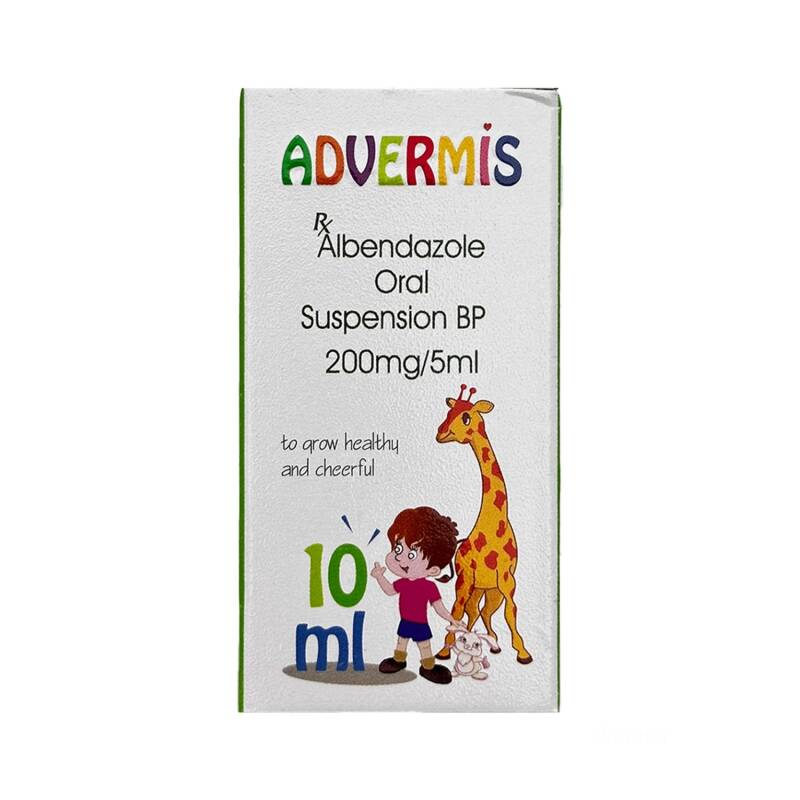
The 5 ml suspension contains 200 mg of micronized albendazole. Excipients: sodium citrate, 70% sorbitol solution, quinoline yellow, banana flavoring, sucrose, sunset yellow, purified water, sodium methylparaben, sodium propylparaben, bronopol, disodium xanthan gum, colloidal silicon dioxide, polysorbate, citric acid EDTA, mono. Description: A yellow-colored, flavored suspension. Pharmacotherapeutic group Anthelmintic (worm-expelling) preparation.
Benzimidazole derivatives. ATC code: P02CA03. Pharmacological properties Pharmacodynamics Albendazole is a representative of the benzimidazole carbamate group; it has anthelmintic and antiprotozoal effects against intestinal and tissue parasites. Studies in animals have shown that albendazole exhibits larvicidal, ovasidic and vermicidal activity, exerting an antihelminth effect by preventing the polymerization of tubulin.
It causes disruption of this helminth’s metabolism and depletion of energy, and as a result it immobilizes and destroys albendazole-sensitive helminths. Albendazole is effective in mono- and polyinvasions (helminthoses caused by various types of nematodes and some cestodes). It prevents the development and multiplication of helminth larvae that have newly emerged from eggs in the body. Albendazole has a destructive effect on the adult forms, larvae and eggs of helminths parasitizing in muscle tissue, the intestine and other organs.
Albendazole is active against the following intestinal parasites: - Nematodes: Ascaris lumbricoides (roundworms); Trichuris trichuria (whipworms); Enterobious vermicularis (pinworms); Ancylostoma duodenale (hookworms); Necator americanus (hookworms); Strongyloides stercoralis. - Hookworms cause the development of Larva migrans infection of the skin. - Cestodes: Hymenolepsis nane (tapeworm); Taenia solium (pork tapeworm); Taenia saginata (beef tapeworm); - Trematodes: Opisthorchis viverrini and Clonorchis sinensis. - Protozoa: Giardia liamblia (duodenal and intestinal worms) Systemic helminth infections: Albendazole has an effective action in the treatment of tissue parasites, including cystic echinococcosis caused by Echinococcus granulosus and alveolar echinococcosis caused by Echinococcus multilocularis.
Albendazole is also effective in the treatment of gnathostomiasis caused by Gnathostoma spingerum, capillariasis caused by Capillaria philippinensis, and neurocysticercosis caused by larval infection with Taenia solium. In clinical studies, it was observed that treatment of Echinococcus granulosus cysts with albendazole destroyed the cyst in up to 80% of patients and/or significantly reduced its size. Laboratory and animal studies conducted after treatment with albendazole showed that 90% of cysts were destroyed; in untreated cysts, this figure was 10%. In the treatment of cysts resulting from Echinococcus multilocularis infection (after treatment with albendazole), only a small proportion of patients were treated, while in most patients stabilization of the disease was achieved.
Pharmacokinetics Absorption In humans, after oral administration albendazole is poorly absorbed (less than 5%). If taken with fatty food, the systemic effect of albendazole increases, increasing its absorption by approximately five times. In 6 patients with hydatid cysts, when albendazole was taken with fatty food, the maximum plasma concentration of albendazole sulfoxide was 1.31 µg/ml and was reached after 2–5 hours. Albendazole is detected in plasma at low concentrations or not detected at all because albendazole is converted into the metabolite albendazole sulfoxide before being absorbed into the systemic bloodstream.
The systemic anthelmintic effect of albendazole is associated with albendazole sulfoxide, the initial metabolite. Distribution After oral administration of a single 400 mg dose of albendazole, during intake of albendazole sulfoxide (the pharmacologically active metabolite) with breakfast, it was reported that the plasma concentration reaches 1.6–6.0 µmol/L. Binding of albendazole sulfoxide to blood proteins is 70%. Significant amounts of albendazole sulfoxide are found in bile, liver, cerebrospinal fluid, urine, and in the fluid and cysts of helminth cysts.
The concentration in plasma is 3–10 times higher than in cyst fluid and 2–4 times higher than in cerebrospinal fluid. According to the results of in vitro clinical studies, albendazole sulfoxide is eliminated slowly from cysts compared with plasma. Metabolism Albendazole is metabolized in the liver and the first metabolite with anthelmintic properties (albendazole sulfoxide) is formed. Albendazole sulfoxide is the primary metabolite with a large share in effectiveness against tissue infections.
Albendazole sulfoxide is converted to albendazole sulfone (second metabolite) and other oxidized products. Elimination The half-life (T2) of albendazole sulfoxide from plasma is 8–12 hours. Albendazole sulfoxide and its metabolites are excreted mainly via bile, and only a small fraction via urine. It has been shown that elimination from cysts occurs at a high rate and within a few weeks after receiving long-term doses.
Special clinical situations Pharmacokinetics Impaired renal function Since less than 1% of albendazole sulfoxide is excreted by the kidneys, clearance does not change in patients with impaired renal function. Impaired biliary system In patients with obstruction outside the liver, the maximum plasma concentration (Cmax) of albendazole sulfoxide increases by 2 times, the area under the pharmacokinetic curve (AUC) by 7 times, and the time to reach maximum concentration (Tmax) up to 10 hours; the half-life (T2) extends up to 31.7 hours. Use in pediatrics In pediatric patients (6–13 years) with echinococcal cysts, when albendazole is taken as a single 200–300 mg dose on an empty stomach (3) and after meals (2), the pharmacokinetics of albendazole sulfoxide is similar to that of adults who received food. Use in the elderly Studies on the pharmacokinetics of albendazole sulfoxide in this age group have not been conducted; however, in patients with 26 hydatid cysts (under 79 years), pharmacokinetic parameters were consistent with those of younger patients.
Albendazole is an anthelmintic agent with bactericidal, ovasidic and larvicidal activity and is effective in the treatment of the following diseases: • Echinococcosis • Neurocysticercosis • Ascariasis • Enterobiasis • Ankylostomiasis • Strongyloidiasis • Trichocephalosis • Nematodosis • Teniasis • Trichinellosis ⚫ Clonorchiasis • In children: Giardiasis - Helminth (roundworm) - Tapeworm - Hookworms - Hairworm - Strongyloidiasis - Taeniasis - Hymenolepiasis -- Chlonorchiasis - Opisthorchiasis - Giardiasis - Larva migrans infection of the skin
High sensitivity to compounds of the benzimidazole class, to albendazole, or to any of the components contained in the preparation; children under 1 year of age; diseases of the retina of the eye.
No precise and controlled clinical studies have been conducted regarding the intake of albendazole in pregnant women. The use of the preparation during pregnancy and lactation is contraindicated.
one 400 mg tablet or 10 ml suspension one 400 mg tablet or 10 ml suspension one 400 mg tablet or 10 ml suspension one 400 mg tablet or 10 ml suspension one 400 mg tablet or 10 ml suspension one 400 mg tablet or 10 ml suspension one 400 mg tablet or 10 ml suspension Treatment duration Single dose Twice daily dose Daily dose for 3 days. Twice daily dose for 3 days. Daily dose for 5 days. Daily dose for 1–3 days.
Data from large clinical studies were used to determine the frequency of very common and rare adverse effects. Frequencies assigned to all other adverse effects (i.e., those occurring in <1/1000) were determined mainly using post-marketing data and refer to reporting rates rather than the actual frequency.
During the use of albendazole, mild and reversible granulocytopenia and pancytopenia, as well as changes in liver function tests, may be observed rarely. At the beginning of each 28-day treatment course and every 2 weeks, the number of formed elements of the blood should be determined. If the number of formed elements does not change or only slight changes are observed, albendazole treatment may be continued. During albendazole treatment, in approximately 16% of patients a reversible mild to moderate increase in the level of liver enzymes may be noted.
When taking the preparation is stopped, these indicators normalize. At the beginning of each treatment course, it is necessary to check the level of functional liver tests. If liver enzyme levels increase significantly, albendazole treatment is discontinued. After liver enzyme levels reach normal values, treatment with the preparation is resumed and laboratory tests are performed more frequently.
2 Albendazole is not used in pregnant women, but it is appropriate to prescribe it when there is no alternative method of treatment. After completion of albendazole intake, women should not become pregnant during the first month. If pregnancy occurs, albendazole intake should be stopped immediately. Caution Information for patients • Since albendazole has teratogenic effects, women of reproductive age should undergo a pregnancy test before albendazole is prescribed.
• It is dangerous to become pregnant within 1 month after completing albendazole treatment. • Albendazole is taken with fatty food. • In patients with neurocysticercosis, when taking this preparation, due to the development of an inflammatory process associated with the death of parasites, an increase in intracranial pressure and seizures may be observed; in such cases, anti-seizure medications may be used. Drug interactions When used together with theophylline, the theophylline level should be monitored.
It has been confirmed that taking dexamethasone, cimetidine and praziquantel increases the plasma concentration of the active metabolite of albendazole. Ritonavir, phenytoin, carbamazepine and phenobarbital may reduce the plasma concentration of albendazole’s active metabolite. The clinical significance of this is unknown, but it may lead to a decrease in efficacy, especially when treating systemic helminth infections. Considering that alternative dosing regimens or treatment may be required, the effectiveness of treatment should be monitored in patients.
Albendazole has minimal effect. Dizziness may occur during intake of albendazole; in this case, caution is required. Use Standard dosage regimen and dose For children aged 1 to 2 years, the usual single dose of Advermis suspension is 10 ml (200 mg). In severe mixed infestations associated with strongyloidiasis or taeniasis, a one-day dose may be inadequate and the dose may be given for three consecutive days.
Intestinal infections and Larva migrans infection of the skin
Age Adults and children over 2 years Children aged 1–2 years Adults and children over 2 years Adults and children over 2 years Only children aged 2–12. Adults and children over 2 years Very often (≥1/10), often (≥1/100 to <1/10), infrequent (≥1/1,000 to <1/100), rare (≥1/10,000 to <1/1,000), very rare (<1/10,000), frequency unknown (cannot be estimated from available data). Use in intestinal infections and Larva migrans infection of the skin (low-dose short-term treatment) Disorders in the immune system Rare ὄντο. (≥1/10,000–<1/1,000): hypersensitivity reactions, including
rash, itching and disorders in the nervous system Infrequent (≥1/1,000–<1/100): headache and dizziness. Disorders in the gastrointestinal system Infrequent (≥1/1,000 to <1/100): symptoms observed in the upper gastrointestinal tract (e.g., pain in the epigastric area or abdominal pain, nausea, vomiting) and diarrhea. Hepatobiliary disorders Rare (≥1/10,000 to <1/1,000): increased activity of liver enzymes, acute liver failure. Diseases of the skin and subcutaneous tissue Very rare (<1/10,000): erythema multiforme, Stevens-Johnson syndrome.
Use in systemic helminth infections (longer treatment duration at high doses) 3 Disorders in the blood and lymphatic system Infrequent (≥1/1,000–<1/100): leukopenia Very rare (<1/10,000): pancytopenia, aplastic anemia, thrombocytopenia, agranulocytosis Liver diseases including patients with hepatic echinococcosis are more susceptible to bone marrow suppression. Disorders in the immune system Infrequent (≥1/1,000 to <1/100): hypersensitivity reactions including rash, itching and measles. Disorders in the nervous system Very often (≥1/10): headache; Often (≥1/100 to <1/10): dizziness. Disorders in the gastrointestinal system Often (≥1/100 to <1/10): gastrointestinal disorders (abdominal pain, nausea, vomiting).
In the treatment of patients with echinococcosis, gastrointestinal disorders have been associated with albendazole. Hepatobiliary disorders Very often (≥1/10): mild or moderate increase in the activity of liver enzymes. Infrequent (≥1/1,000 to <1/100): hepatitis. Overdose There is no information about overdose.
If overdose is suspected, symptomatic treatment should be carried out (the stomach should be washed).
Product Filters | ||
|---|---|---|
| Supplier Product Code | : | 111-27826 |
 Powered by
T-SOFT
E-Commerce
Powered by
T-SOFT
E-Commerce