English
Azərbaycan
Русский
49 ₼-dən pulsuz çatdırılma
Sifarişimi izlə
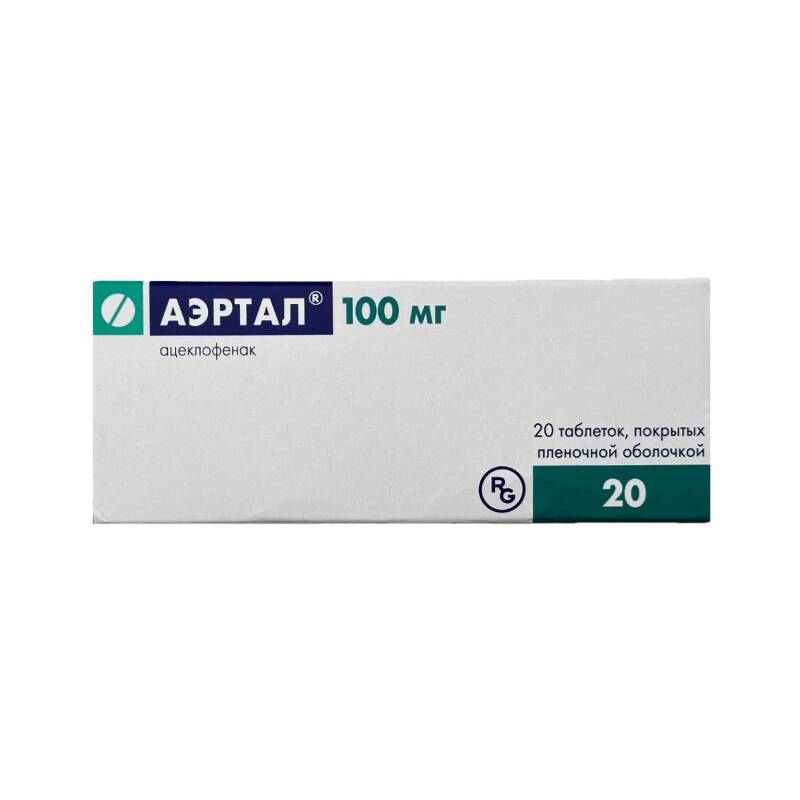
Each tablet contains 100 mg aceclofenac. Excipients: glycerol distearate, sodium croscarmellose, povidone K-30, microcrystalline cellulose: Sepifilm 752 (hydroxypropylmethylcellulose, microcrystalline cellulose, titanium dioxide (E 171), macrogol stearate (Type I)).
• For osteoarthritis, rheumatoid arthritis and ankylosing spondylitis, and other diseases of the musculoskeletal system accompanied by pain (e.g., shoulder-periarthritis and other extra-articular manifestations of rheumatism). ווומומווומוומוט IIIIpjspce • To prevent agry (back pain, tooth pain and primary dysmenorrhea).
• Hypersensitivity to any component of the product. • Patients who take substances with the same effect that cause asthma attacks, bronchospasm, acute rhinitis, or other similar conditions (e.g., acetylsalicylic acid and/or other NSAIDs); and/or patients who, as a result of taking these substances, have bleeding or perforation of the gastrointestinal tract (GIT) (MBT), or patients with acute, recurrent, or possible ulcer of the duodenum, or patients with bleeding in their medical history (two or more ulcer episodes and proven ulcer bleeding). Patients with acute bleeding or diseases accompanied by bleeding (hemophilia or impaired blood clotting function).
• Diagnosed congestive heart failure (functional class II–IV according to NYHA), ischemic heart disease, diseases of peripheral arteries, or cerebrovascular diseases. ⚫ During pregnancy, especially in the last trimester, the minimum effective dose should be used unless there is a strict indication for severe impairment of kidney and liver function (see the " " section). These patients must receive the effective minimal dose of the product; combined therapy with protective agents (e.g., misoprostol or proton pump inhibitors) is important, and it is also important for patients receiving small doses of aspirin or other products that negatively affect the MBT (see "
see the " " section)
Additional adverse effects observed during clinical trials and in post-marketing use have been reported; adverse effects are grouped according to the frequency of organ overloading as often (≥ 1/10); often (<1/10 000). 10): sometimes (≥ 1/1 000–< 1/100); rarely (≥ 1/10 000–< 1/1 000); Often (≥1/100 to <1/10) Rash sometimes (≥1/1 000 to <1/100–0) Rare Very rare (≥1/10 000 to <1/10 000) <1/1 000–0 Anemia Anaphylactic reactions (including shock), hypersensitivity Visual disturbances Impaired bone marrow function, granulocytopenia, thrombocytopenia, neutropenia, hemolytic anemia Hyperkalemia Depression, unusual dreams, insomnia Paresthesia tremor drowsiness, headache, dysgeusia (change in taste perception) " and "See the " section for other medicinal products" There is no information about penetration into breast milk; in studies in labeled C14 rats, no significant penetration of aceclofenac into milk was observed. After assessing the potential benefit of continuing breastfeeding/aceclofenac use for the fetus and the benefit for the mother, breastfeeding should be continued/aceclofenac should be continued only in cases where the potential benefit to the fetus outweighs the possible risk. During lactation, it is recommended to avoid using aceclofenac like other inhibitors of prostaglandin synthesis. The Aertal expression may weaken fertility, and women planning pregnancy should stop taking the Aertal product if they have difficulty conceiving or require fertility evaluation. and other potentially dangerous mechanisms. Management of seizures, vertigo, nausea, or manifestations of seizures in the central nervous system has been observed in patients; NSAID use and other potentially dangerous mechanisms should be minimized during the shortest possible treatment period needed to control symptoms. " and "See the " section for warnings and precautions". 1 tablet in the evening).
The dose is 200 mg per day, divided into two separate intakes of 100 mg each. In patients with impaired liver function, the required starting dose is 100 mg per day. (see the "Warnings and precautions" section). In patients with mild impairment, there is no need to adjust the dose of aceclofenac; however, adolescents may not be treated (see the " " section). There is no need for information about the effectiveness and safety of use in patients over 65 years of age, but it is necessary to follow the precautions stated in the "Special warnings and precautions" section. The tablets are intended for oral use; swallow the tablets whole. Avoid taking Aertal at the same time as other NSAIDs, including selective inhibitors of cyclooxygenase-2, during meals.
Unwanted effects can be minimized by using the minimal effective dose needed to control symptoms and by reducing the duration of treatment (see the "Directions for use and dosage" section and the description of risks for the gastrointestinal tract and cardiovascular system). Effects on the gastrointestinal tract: bleeding, ulceration or perforation resulting in fatal outcomes in the MBT, whether or not dangerous symptoms are present, whether or not there are serious pathological conditions of the MBT in the medical history, have been observed during any NSAID treatment and at each period of treatment. The risk of developing an ulcer or MBT perforation increases in elderly patients, especially those with ulcers, particularly when ulcers are accompanied by bleeding or perforation, and increases as the NSAID dose is increased in elderly patients (see "
Other adverse effects observed during NSAID use in very rare cases (<1/10 000) include disorders in the kidneys and urinary tract: disorders in the interstitial nephritis and subcutaneous tissues: bullous reactions including Stevens–Johnson syndrome and toxic epidermal necrolysis (very rarely). In special cases, when NSAIDs are taken during chickenpox, serious skin infections and infections of soft tissues have been observed. effects" see the "
Most of them may cause fatal outcomes in the gastrointestinal system due to stomach ulcers, or bleeding may occur, especially in elderly patients (see the "Special precautions" section). Nausea, vomiting, diarrhea, intestinal bloating, stomach pain, melena, vomiting with blood, aphthous stomatitis, and colitis have been observed (see "Special warnings and precautions"). Gastritis has been observed sometimes. Edema, arterial hypertension and heart failure (≥1/100 to <1/10) according to MedDRA (Medical Dictionary for Regulatory Activities, Medical dictionary of legal-regulatory activities) Frequency: Often. Disorders in the vascular system. Disorders in the respiratory system, organs of the chest and mediastinum. Disorders in the gastrointestinal system. Very rare. Rare (≥1/1 000–<1/100) (≥1/10 000–<1/10 000) <1/100–0. <1/1 000–0. Arterial hypertension, hyperemia of the skin, heat intolerance, vasculitis, worsening of arterial hypertension. Shortness of breath, bronchospasm, progression. Melena in the intestine, bloating, gastritis, vomiting in the gastrointestinal tract, worsening, pancreatitis. Dyspepsia. Stomatitis, bloody. Constipation in the abdominal area, vomiting, perforation of the intestinal mucosa, ulcers, diarrhea, hemorrhagic diarrhea, hemorrhages of the mucosa. "Liver" increased activity of enzymes. Disorders in the liver and biliary tract. Disorders in the skin and subcutaneous tissues. Disorders in the kidneys and urinary tract. General disorders and disorders at the injection site. Laboratory and instrumental. Itching, rash, dermatitis, angioneurotic edema. Increased concentration of urea and creatinine in the blood. Liver damage (including hepatitis), increased activity of alkaline phosphatase in the blood. Purpura, eczema, severe reactions in the skin and mucous membranes (including Stevens–Johnson syndrome and toxic epidermal necrolysis). Nephrotic syndrome, renal failure. Edema, increased fatigue, muscle spasms (in the legs). Increased body weight. AERTAL-coated tablets may increase the risk of occurrence. Symptoms should be monitored. The dose and duration of use should be adjusted accordingly.
Pharmacodynamics Aceclofenac is a non-steroidal anti-inflammatory and analgesic agent. The mechanism of action of this product is based on inhibiting the synthesis of prostaglandins. Absorption After oral administration, aceclofenac is absorbed quickly; its bioavailability is almost 100%. After administration, maximum plasma concentration is reached approximately 1.25–3 hours later. Food delays absorption, but does not affect its extent. Aceclofenac is highly bound to plasma proteins (>99.7%). Aceclofenac penetrates synovial fluid and its concentration there is about 60% of the plasma concentration. The volume is about 30 liters. The mean elimination half-life is 4–4.3 hours. About 2/3 of the administered dose is excreted in the urine mainly as conjugated hydroxy-metabolites. Only 1% is excreted unchanged.
It is assumed that aceclofenac is metabolized via CYP2C9 to the main metabolite 4-OH-aceclofenac, and the additional contribution of the effect of this metabolite to the clinical effect of the drug is considered minimal. 4-OH-diclofenac was identified among multiple metabolites. Pharmacokinetics in special patient groups In elderly patients, after a single use, slower elimination of aceclofenac has been observed in patients with impaired liver function. In studies in patients with moderate liver cirrhosis and in healthy volunteers, no differences in pharmacokinetic parameters were observed with multiple uses of the product at doses exceeding 100 mg once daily. In patients with mild to moderate renal impairment, compared with healthy patients, no clinically significant differences in pharmacokinetic parameters were observed after a single dose.
see the " " section). Patients with diseases of the MBT, including elderly patients, and patients with conditions related to the MBT should inform about any unusual symptoms (especially bleeding). In particular, patients taking the product at the same time as systemic corticosteroids, anticoagulants (such as warfarin), selective inhibitors of serotonin reuptake, or antiplatelet agents (such as acetylsalicylic acid) should be especially cautious (see the " " section). If ulcers or bleeding occur in the MBT in patients taking Aertal, treatment should be discontinued. Effects on the cardiovascular system and the central nervous system. For patients with arterial hypertension and/or mild to moderate congestive heart failure, appropriate monitoring and special warnings are important, since information about fluid retention and edema in the body associated with NSAID use has been reported. Research and epidemiological data show that the use of some NSAIDs (especially at high doses and for long periods) may slightly increase the risk of arterial thrombotic events (e.g., myocardial infarction or stroke). There is no clear information about the absence of this risk. Patients with untreated arterial hypertension, heart failure (functional class I according to NYHA), congestive heart failure, and risk factors for the cardiovascular system (e.g., arterial hypertension, hyperlipidemia, diabetes mellitus and smoking), as well as patients with a history of cerebral hemorrhage, should be especially cautious when taking aceclofenac.
By increasing the dose and duration of use, adverse effects occurring in the cardiovascular system
Product Filters | ||
|---|---|---|
| Supplier Product Code | : | 111-15159 |
 Powered by
T-SOFT
E-Commerce
Powered by
T-SOFT
E-Commerce