 EN − AZN

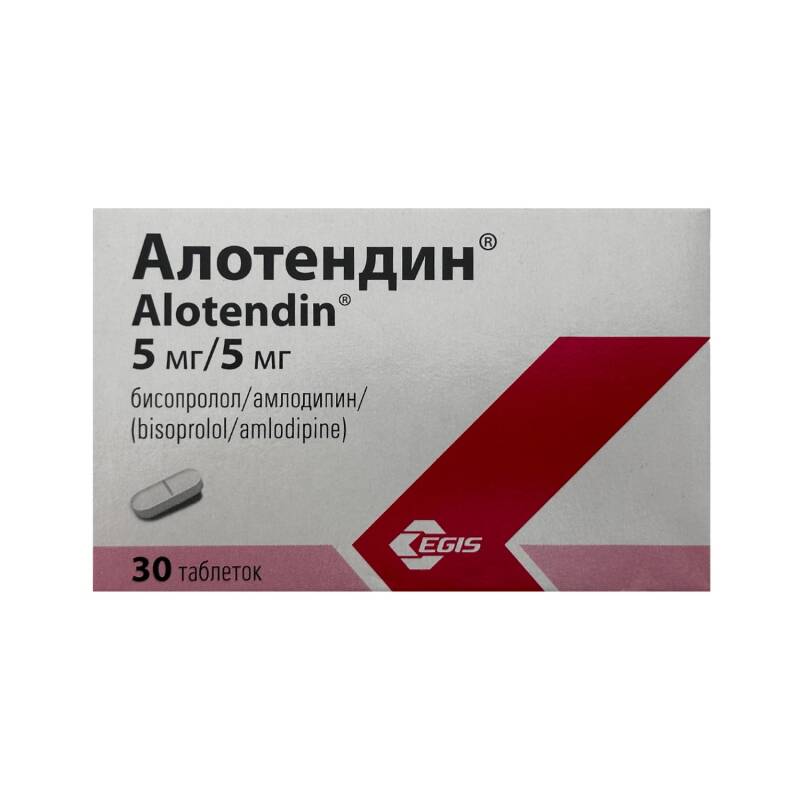
Alotendin 5 mg/5 mg N30 Tablet
Out Of Stock
Notify me when its in stockAlotendin
Alotendin composition
léra (bisoprolol, amlodipine), hypersensitivity to dihydropyridine derivatives and/or to any of the excipients contained in the medicinal product
Indications for use
• In patients with arterial hypertension, when necessary • In patients with first-degree AV block, information about the development of stenocardia and arterial spasm exists. Despite its B1-selectivity, it is not possible to completely exclude the possibility of angina attacks when bisoprolol is prescribed to patients with Prinzmetal angina. • Occlusive diseases of peripheral arteries (especially when complaints increase at the beginning of treatment), • Presence of psoriasis in the medical history and/or at present — in this case, beta-blockers (e.g., bisoprolol) should be used only after careful consideration of benefits and risks. • During treatment with bisoprolol, symptoms of hyperthyroidism may be masked.
• In patients with pheochromocytoma, bisoprolol should be prescribed only after blockade of alpha receptors. • In patients undergoing general anesthesia, beta-blockade reduced arrhythmias and myocardial ischemia during anesthesia induction and intubation, as well as in the postoperative period. It is recommended to continue beta-blockade during surgery due to the possible potential interactions with the medicinal products. However, because bradyarrhythmia, attenuation of reflex tachycardia, and inhibition of reflex ability to compensate for blood loss may occur, the anesthesiologist should be informed in advance about beta-blockade. If it is necessary to stop beta-blocker intake, it should be discontinued gradually and completed approximately 48 hours before anesthesia. Although (B1-selective) beta-adrenoblockers have less effect on lung function compared with non-selective beta-blockers, as with other beta-blockers, their use should be avoided in obstructive lung diseases. • In bronchial asthma and other chronic obstructive lung diseases that may cause symptoms, concomitant bronchodilator therapy should be carried out. In patients with asthma, increased resistance of the airways may occur, and therefore special information is required about substances for which an increase in the dose of ß2-stimulants may be required. In this medicinal product, in each tablet there is less than 1 mmol of sodium (23 mg), i.e., it contains practically no sodium.
Contraindications are not known.
Contraindications
Related to amlodipine: • Severe hypotension, • Obstruction of blood flow from the left ventricle (severe aortic stenosis), • Shock (including cardiogenic shock), • Hemodynamically unstable heart failure after myocardial infarction, • Sudden heart failure and episodes of heart failure requiring intravenous administration of inotropic medicinal products, cardiogenic shock, second- or third-degree AV block (without an electrocardiostimulator), • Sick sinus syndrome, • Sinoatrial block, • Clinically significant bradycardia, • Clinically significant arterial hypotension, • Severe bronchial asthma, • Severe forms of occlusive peripheral arterial diseases and severe form of Raynaud’s syndrome, untreated pheochromocytoma (see “Special warnings and precautions for use”), • Associated with metabolic acidosis
Use during pregnancy and lactation
The safety of amlodipine during pregnancy in humans has not been established. In studies conducted, reproductive toxicity was observed when high doses of amlodipine were used. It is not known whether the amount of amlodipine excreted into breast milk after ingestion by the mother, approximately 3–7% of the dose (interquartile interval, maximum 15%), enters the child’s body. Therefore, the use of Alotendin during lactation is not recommended. There is no information about the effect of the medicinal product on human fertility. In some patients treated with channel blockers, biochemical changes have been observed in the heads of spermatozoa. There is not enough clinical information to assess the possible effect on fertility. Experimental studies show that amlodipine has been described to affect the fertility of male rats.
Use in children
Bisoprolol has pharmacological effects that may have a negative impact on pregnancy and/or the fetus/newborn. B-adrenoblockers reduce placental perfusion, which may lead to growth retardation, intrauterine death, spontaneous abortion and premature birth, and additional effects in newborns (e.g., hypoglycemia and bradycardia). When treatment is necessary, and unless there are strict indications for selective B1-adrenoblockers, the use of Alotendin is not recommended. If treatment is considered necessary, uteroplacental blood circulation and fetal growth should be carefully monitored, and if there is a negative effect on the fetus, alternative treatment should be considered. Careful monitoring and bradycardia symptoms are usually expected within the first 3 days.
Effect on the ability to drive vehicles and operate other potentially dangerous machinery
Amlodipine may have a slight effect on the ability to drive vehicles and operate machinery. In patients who experience dizziness, headache, fatigue and/or nausea, their ability to react may be impaired. In a study involving patients with ischemic disease, bisoprolol did not impair the ability to drive vehicles and operate other potentially dangerous machinery. However, taking into account the variability of individual responses to this medicinal product, the ability to drive vehicles and operate machinery may be impaired. This effect is most likely when treatment is initiated, when treatment is changed, and at the same time when alcohol is used.
How to use Alotendin and dosage
Alotendin should be used at the recommended doses in patients in whom adequate control of high blood pressure and/or coronary artery pathology can be achieved during the simultaneous use of monocomponent medicinal products at the same doses. The daily dose corresponds to one tablet at a certain dose. It is not allowed to stop suddenly, because this may lead to a temporary worsening of the clinical condition. In patients with ischemic heart disease, sudden discontinuation is not possible; gradual dose reduction is recommended. Often: swelling of the ankle, muscle spasms: arthralgia, myalgia, back pain.
Disorders of the kidneys and urinary tract: Sometimes: impaired urination, nocturia, pollakiuria; disorders of the system and renal vascular disorders. Sometimes: impotence, gynecomastia; disorders and disorders at the injection site. Very often: edema: fatigue, asthenia.
Sometimes: pain in the chest, pain, discomfort and effects on the results of instrumental studies. Sometimes: increase or decrease in body weight. Bisoprolol: metabolism and nutrition disorders. Rarely: increased triglyceride levels. Sometimes: depression, sleep disorders. Rarely: nightmares, hallucinations. Often: dizziness*, headache*. Rarely: syncope.
Disorders of the eye: Rarely: decreased secretion of lacrimal fluid (this should be considered when patients use contact lenses). Very rarely: conjunctival and labyrinth disorders. Rarely: hearing impairment disorders. Rarely: impaired AV conduction, worsening of existing heart failure, bradycardia disorders. Often: feeling of coldness and numbness of the extremities; arterial hypotension.
Disorders of the respiratory system, chest and mediastinal organs: Rarely: allergic rhinitis; bronchospasm disorders in patients with asthma or obstructive lung disease. Often: gastrointestinal symptoms such as nausea, vomiting, diarrhea, constipation, and disorders of the biliary tract. Rarely: hepatitis. Disorders of the skin and subcutaneous tissues: Rarely: hypersensitivity reactions such as itching, redness, rash and angioedema. Rarely: alopecia; psoriasis disease may be caused or worsened and may also cause skin changes such as psoriasis: toxic epidermal necrolysis.
Musculoskeletal system and connective tissue disorders: Sometimes: decreased strength and cramps; disorders of the system and renal vascular disorders. Rarely: erectile dysfunction disorders and disorders at the injection site. Often: fatigue*. Sometimes: fatigue*. Effects on laboratory and instrumental study results: Rarely: increased activity of liver enzymes (ALT, AST).
* These signs are mainly mild at the beginning of treatment and usually disappear within 1–2 weeks. Reporting of suspected additional adverse reactions after authorization of the medicinal product is important. These measures allow monitoring of the benefit-risk ratio of the medicinal product. When serious additional adverse effects occur or new additional effects not mentioned in this section occur, healthcare professionals are asked to report them via the National Pharmacovigilance System. Overdose: Amlodipine-related symptoms. In humans, very rare cases of intentional overdose have been reported.
Available data indicate that a significant overdose of amlodipine may cause marked peripheral vasodilation and, most likely, reflex tachycardia.
Pharmacological properties
Pharmacodynamics Mechanism of action Amlodipine inhibits the transmembrane influx of calcium ions into myocardial and smooth muscle vascular cells (a blocker of slow calcium channels or a calcium antagonist). The antihypertensive mechanism is associated with a direct relaxing effect on vascular smooth muscle, which leads to a decrease in peripheral vascular resistance. Bisoprolol is a potent, highly selective ß1-blocker. It has no intrinsic sympathomimetic activity (ISA) and also has no significant membrane-stabilizing properties.
Interaction with other medicinal products
Other medicinal substances’ effect on amlodipine: CYP3A4 isoenzyme inhibitors. Concomitant use with strong or moderate inhibitors of the CYP3A4 isoenzyme of amlodipine (protease inhibitors, azole group antifungal agents, macrolides such as erythromycin or clarithromycin, verapamil and diltiazem) may lead to a significant increase in amlodipine concentration. In elderly patients, the clinical picture of possible variations in parameters may be more pronounced. Therefore, careful medical monitoring and dose adjustment may be required. When used together with clarithromycin, the risk of developing hypotension increases; patients should be closely monitored when clarithromycin is used concomitantly. CYP3A4 isoenzyme inducers. Concomitant use with substances that are major inducers of CYP3A4 may change the concentration of amlodipine in blood plasma. Therefore, monitoring of arterial blood pressure is necessary, and dose adjustment should be considered both during and after concomitant use with strong CYP3A4 inducers (e.g., rifampicin, St. John’s wort/Hypericum perforatum preparations). Grapefruit or grapefruit juice is not recommended, because in some patients the bioavailability of amlodipine may increase, resulting in a stronger hypotensive effect.
Dantrolene (infusion). In animal studies, after administration of verapamil and intravenous administration of dantrolene, an increased risk of death due to ventricular fibrillation and cardiovascular failure associated with the development of hyperglycemia was observed. Therefore, in patients predisposed to malignant hyperthermia and treated for malignant hyperthermia, it is necessary to avoid the use of calcium channel blockers such as amlodipine. Concomitant therapy with monotherapy or with other antihypertensive medicinal products. • Treatment of chronic stable angina as monotherapy or, if necessary, in combination with other antianginal agents. When amlodipine and cyclosporine are used together, no studies of interaction have been conducted in volunteers or other groups. Excluding patients after renal transplantation in whom an increase in the minimal changing concentration of cyclosporine (0%–40%) is observed, it is necessary to consider monitoring the concentration of cyclosporine in blood plasma in patients who have undergone renal transplantation during combination therapy and, if necessary, reduce the cyclosporine dose.
In studies of clinical interaction, amlodipine did not affect the pharmacokinetics of atorvastatin, digoxin and/or warfarin.
Special warnings and precautions for use
Amlodipine: The efficacy and safety of amlodipine during hypertensive crises have not been established. In patients with heart failure, the medicinal product should be prescribed with caution. According to the results of long-term, placebo-controlled studies involving patients with severe heart failure of class III/IV, the incidence of pulmonary edema in the amlodipine group was higher than in the placebo group. In patients with heart failure, calcium channel blockers, including amlodipine, should be used with caution, because these medicinal products may increase the risk of cardiovascular complications and death. In patients with impaired liver function, the half-life and AUC of amlodipine increase. Dosing recommendations for this group of patients have not been established, and therefore amlodipine should be prescribed with caution. In patients with impaired renal function, changes in amlodipine concentration at usual doses are not related to the degree of impaired renal function. It is not removed by hemodialysis.
Elderly patients: When increasing the dose in elderly patients, caution is required. If there are no specific indications for discontinuation, especially in the case of ischemic heart disease, discontinuation of treatment with bisoprolol should not be done abruptly; otherwise, it may cause a temporary worsening of heart disease (see “How to use and dosage”). Bisoprolol should be used with extreme caution in patients with hypertension and/or angina associated with heart failure. It should be used with caution in the following cases: • Diabetes mellitus with sudden changes in blood glucose levels; symptoms of hypoglycemia (tachycardia, strong heartbeat, excessive sweating) may be masked. • Severe fasting/diet. • During concomitant desensitization therapy, as with beta-blockers, bisoprolol may increase sensitivity to allergens and aggravate anaphylactic reactions.
Effect of amlodipine on other medicinal products. Amlodipine’s hypotensive effect may enhance the hypotensive effect of medicinal products that lower arterial blood pressure. There was a risk of increased tacrolimus levels in the blood when taken together with amlodipine. In patients receiving treatment with amlodipine, it is required to monitor tacrolimus levels in the blood to eliminate the risk of tacrolimus toxicity and, if necessary, adjust the dose. mTOR inhibitors such as sirolimus, temsirolimus and everolimus are CYP3A4 substrates and weak inhibitors of CYP3A4 isoenzyme. When used together with inhibitors, amlodipine may increase their exposure. Simvastatin. When amlodipine at a dose of 10 mg and simvastatin at a dose of 80 mg are taken together, compared with simvastatin monotherapy, the concentration of simvastatin increases by 77%. In patients receiving this combination, the simvastatin dose should be limited to up to 20 mg per day. Not recommended combinations: Calcium antagonists such as verapamil and, to a lesser extent, diltiazem. In patients receiving verapamil intravenously, it may cause severe hypotension and atrioventricular block. Central-acting antihypertensive medicinal products such as methyldopa, moxonidine, rilmenidine. Concomitant use of central-acting antihypertensive substances may lead to a reduction in heart contractions and heart rate and to vasodilation; it may increase the risk of “rebound hypertension syndrome” and should not be taken. Dihydropyridine calcium antagonists such as felodipine and nifedipine. Concomitant use increases the risk of developing arterial hypotension, and in patients with heart failure it is not possible to exclude an increased risk of subsequent worsening of the pumping function of the ventricles.
Class I antiarrhythmic medicinal products (e.g., disopyramide, quinidine, lidocaine, phenytoin, flecainide, propafenone). Class I antiarrhythmic medicinal products may increase the duration of atrioventricular conduction and the negative inotropic effect (e.g., amiodarone). Agents that enhance the effect on atrioventricular conduction time. Concomitant use with B-blockers (e.g., eye drops for glaucoma treatment) that have an effect on increasing atrioventricular conduction time and the risk of developing bradycardia. Medicinal products for oral diabetes. They may enhance the systemic effect of bisoprolol and mask the symptoms of hypoglycemia due to blockade.
Anesthetics. Increased risk of developing reflex tachycardia suppression and arterial hypotension (see “ ” section). Cardiac glycosides. Increased risk of reduced heart contraction frequency and prolonged atrioventricular conduction time. Anti-inflammatory medicinal products (QSiaP). Osiap may reduce the hypotensive effect of bisoprolol (e.g., isoprenaline, dobutamine). Sympathomimetics that activate α-adrenoreceptors (e.g., noradrenaline, adrenaline) may reduce the effects of bisoprolol. Concomitant use with bisoprolol and these medicinal products may affect musculoskeletal system and connective tissue disorders.
Adverse effects
Adverse reactions observed when active substances are used separately are presented according to the following frequency categories: very common (≥1/10); common (≥1/100 to <1/10); occasional (≥1/1000 to <1/100); rare (≥1/10,000 to <1/1000); very rare (<1/10,000); not known (frequency cannot be estimated from available data). Amlodipine: drowsiness, dizziness, headache, palpitations, bleeding, abdominal pain, nausea, edema in the ankles, edema, severe fatigue and disorders of the lymphatic system. Very rarely: leukopenia, thrombocytopenia. Very rarely: allergic reactions.
Metabolism and nutrition disorders: Occasional: hyperglycemia disorders. Occasional: insomnia, mood changes (including anxiety), depression. Rarely: confusion. Nervous system disorders: Often: headache, dizziness, drowsiness (especially at the beginning of treatment). Occasional: syncope, hypesthesia, paresthesia, taste disturbance, tremor. Rarely: increased tone reduction, peripheral neuropathy. Not known: extrapyramidal disorders. Eye disorders: Occasional: blurred vision (including diplopia). Ear and labyrinth disorders: Occasional: tinnitus.
Cardiac disorders: Often: strong palpitations: arrhythmia (including bradycardia, ventricular tachycardia and atrial fibrillation). Very rarely: myocardial infarction disorders. Often: hot bleeding.
Occasional: in cases of arterial hypotension: disorders of the vascular system, chest and mediastinal organs. Occasional: shortness of breath. Rarely: cough, rhinitis.
Gastrointestinal disorders: Often: nausea, abdominal pain, dyspepsia, impaired secretion of bile (including diarrhea and constipation). Occasional: vomiting, dry mouth. Rarely: gastritis, hyperplasia of the gums, disorders of the pancreas and biliary tract. Very rare: hepatitis, jaundice, increased liver enzymes (mainly with cholestasis). Disorders of the skin and subcutaneous tissues: Occasional: alopecia, purpura, change in skin color, excessive sweating, itching, rash, exanthema, and in volunteers: after taking 10 mg amlodipine, the intake of activated charcoal within 2 hours reduced the absorption of amlodipine.
Because amlodipine has a high binding capacity to proteins, it is not significantly removed by dialysis. Symptoms. When the dose limit is exceeded with B-blockers, bradycardia, arterial hypotension, bronchospasm, severe heart failure and hypoglycemia are observed more frequently than expected symptoms. There are large individual differences in sensitivity to high single doses. However, it is more likely that patients with heart failure have high sensitivity to this. When the dose limit is exceeded with bisoprolol, treatment should be discontinued and supportive and symptomatic therapy should be applied. Data indicate that bisoprolol is difficult to dialyze. Based on recommendations for pharmacological effects and other ß-blockers, when clinically necessary, the following general measures should be taken: if intravenous atropine has no effect, isoprenaline and/or another medicinal product with positive chronotropic effect may be administered carefully; in cases where transvenous pacemaker application is required, it may be necessary. In hypotension: intravenous administration of fluids and vasopressor medicinal products may be effective.
In AV block (second or third degree): carefully monitor the patient’s condition and apply an isoprenaline infusion and/or transvenous pacemaker device. In case of deficiency: intravenous administration of diuretics, positive inotropic medicinal products, and vasodilators. When prescribing isoprenaline, ß2-sympathomimetics and/or bronchodilators such as aminophylline: intravenous administration of glucose.
Limited data indicate that bisoprolol is poorly eliminated by hemodialysis.