English
Azərbaycan
Русский
49 ₼-dən pulsuz çatdırılma
Sifarişimi izlə
Severe acute pain syndrome during trauma and/or chronic and post-operative pain syndrome, pain during spasms, when other therapeutic measures are contraindicated, and fever that is resistant to treatment methods in oncological diseases and other conditions
Hypersensitivity to metamizole and other pyrazolone derivatives, as well as to pyrazolones, for example phenylbutazone (including patients who have experienced agranulocytosis as a result of the use of these medicinal products): analgesic bronchial asthma and/or intolerance to analgesics (upper type—angioedema), more precisely, patients with other forms of anaphylactoid reactions (e.g., urticaria, rhinitis, angioedema) in response to the use of salicylates, paracetamol, or non-steroidal anti-inflammatory drugs such as diclofenac, ibuprofen, indometacin, or naproxen; disorders of bone marrow function (e.g., after cytostatic therapy) and/or diseases of blood-forming organs; hereditary glucose-6-phosphate dehydrogenase deficiency (hemolysis); acute intermittent hepatic porphyria (risk of developing porphyria attacks); acute renal and/or hepatic failure; pregnancy (1st and 3rd trimesters) and lactation; infant age (up to 3 months and/or body weight less than 5 kg); when using sodium bile, the patients’ conditions must be under strict medical supervision and, if anaphylactic/anaphylactoid reactions develop, emergency care measures must be available. Anaphylactic shock may occur in patients; therefore, in patients with asthma or atopy, metamizole sodium should be prescribed with caution. Patients who develop anaphylactoid reactions in response to the use of sodium may also be at risk of other non-narcotic analgesics/these reactions (non-steroidal anti-inflammatory drugs). In response to the use of metamizole sodium, patients who have experienced reactions (e.g., agranulocytosis) during the use of other non-narcotic analgesics, as well as other pyrazolones and pyrazolidines, are also exposed to the risk of developing reactions. Life-threatening skin reactions (TEN) have been described in association with the use of metamizole sodium, or symptoms of TEN (e.g., progressive skin rash accompanied by blistering and/or damage to mucous membranes in most cases, such as Stevens-Johnson syndrome (SJS) and toxic epidermal necrolysis). If such reactions occur, treatment with metamizole sodium must be stopped immediately and patients in the future should be informed about the use of the medicinal product in this category. In patients, especially, during the first days of treatment, comprehensive monitoring of skin reactions should be carried out for symptoms of the diseases for which treatment is indicated. When using the product for a long period (more than 7 days), monitoring of the peripheral blood picture is required. Very rarely, agranulocytosis may develop at any time during treatment; it does not depend on the duration of treatment and may be severe and life-threatening, and in some cases may be fatal. Therefore, if symptoms that are likely to be associated with neutropenia occur (fever, chills, sore throat, difficulty swallowing, stomatitis, erosive-ulcerative lesions of the oral mucosa, vaginitis or proctitis, and a decrease in the number of neutrophils in peripheral blood below 1500/mm3), treatment with the medicinal product should be stopped and the patient should consult a doctor. If such reactions occur, treatment must be stopped immediately and monitoring of the indicators of a complete blood count should be carried out until the condition of pancytopenia fully normalizes. Patients should be informed that if pathological changes in the blood occur during treatment with metamizole sodium (e.g., general weakness, infections, persistent fever, development of hematomas and bleeding, pallor), they should seek medical help immediately. Hypotensive reactions. Metamizole sodium may cause isolated hypotensive reactions. The risk of these reactions is higher in the following cases, where the reactions may be dose-dependent: pre-existing arterial hypotension, decreased circulating blood volume and/or dehydration, non-stable hemodynamics, or acute circulatory disturbances (e.g., in patients with myocardial infarction or injuries). In febrile patients. Therefore, comprehensive diagnostic evaluation of the above patients should be performed and they should be kept under strict medical supervision. Preventive measures to reduce the risk of reactions (stabilization of hemodynamics) may be required; in patients in whom it is unacceptable to lower blood pressure at any cost (e.g., in severe ischemic heart disease or significant stenosis of cerebral arteries), metamizole sodium should be used only in the area where it is permitted, with comprehensive monitoring of hemodynamic parameters. The use of the medicinal product to relieve acute pain in the abdominal area (until the cause is determined) is unacceptable. Disorders of renal function. In infants aged 3–12 months with disorders of liver and/or kidney function (only in cases where intravenous administration is intended, taking into account the reduction of the excretion rate of the medicinal product in patients with contraindications).
(2nd trimester) It is recommended to avoid the use of metamizole sodium in high doses. The product contains sodium, which should be taken into account in patients who follow a diet using low-sodium intake. Administration instructions. When the first signs of anaphylactic/anaphylactoid reactions appear, metamizole sodium should be administered intravenously at a very low rate (not more than 1 ml per minute) to stop the injection and also to minimize the risk of developing separate hypotensive reactions. For intramuscular injection, a long needle intended for intramuscular administration should be used. Taking into account the lack of sufficient information about the use of metamizole sodium, it should not be used in the 1st trimester. The use of metamizole sodium in the 3rd trimester is contraindicated. Metamizole metabolites penetrate into breast milk; therefore, during the use of the medicinal product and also for 48 hours after the use of the last dose of the medicinal product, breastfeeding should be stopped.
In patients receiving treatment with cytostatic medicinal products and in children up to 5 years of age, the use of metamizole sodium should be carried out only under medical supervision. /In the 2nd trimester, metamizole sodium can be used only if the expected benefit to the mother outweighs the potential risk to the fetus. Despite the weak inhibition of prostaglandin synthesis by sodium, the premature closure of the arterial (ductus arteriosus) duct may be possible, as well as perinatal complications associated with impaired platelet aggregation in the mother and/or newborn should not be excluded. Therefore
Taking into account the possible side effects of the medicinal product, it is important to be cautious during the treatment period when driving and when engaging in other potentially dangerous activities that require high attention and rapid psychomotor reactions.
The product is intended for intravenous and intramuscular use. Parenteral administration is indicated only when oral administration is not possible. Before administration, it is recommended to warm the product to body temperature. Adolescents aged 15 years and older: use of a single dose of 1–2 ml (500 mg/ml) and/or 2–4 ml (250 mg/ml) solution of metamizole sodium (intramuscularly or intravenously). The maximum daily dose is 2000 mg, which is divided into 2–3 doses per day. The maximum single dose is 1000 mg.
Children aged 3–12 months (body weight 5–9 kg): the product should be administered only intramuscularly at a dose of 50–100 mg per every 10 kg of body weight (0.1–0.2 ml of a 500 mg/ml solution or 0.2–0.4 ml of a 250 mg/ml solution). The single dose can be prescribed up to 2–3 times per day. For the purpose of minimizing the risk of blood pressure decrease, intravenous administration of the product should be carried out in the patient’s lying position, with monitoring of arterial pressure, pulse, and respiratory rate, at a very low rate (injection rate not exceeding 1 ml/min). When the first signs of anaphylactoid reactions appear, administration of the product should be stopped. Taking into account the presence of danger related to the dose-dependent risk of a non-allergic decrease in blood pressure, metamizole sodium solution should be administered with special caution in an amount not exceeding 2 ml (1000 mg). When administered at an excessively high rate, a critical decrease in arterial pressure and shock may occur. In patients, taking into account the slowing of the excretion rate of metamizole sodium metabolites from the body, lower doses of the product should be used.
In severely ill patients and in cases where creatinine clearance is impaired, taking into account the slowing of the excretion rate of metamizole sodium metabolites from the body, lower doses of the product should be used. In patients with impaired renal function, the excretion rate of the product decreases; therefore, multiple uses of the product should be avoided in these patients. There is no information about long-term use experience. Is dose correction required during treatment? When used as an analgesic—1 to 5 days; when used as an antipyretic—1 to 3 days. Typical symptoms include damage to mucous membranes (oral cavity and pharynx, anorectal area, genital organs), sore throat and fever.
However, when antibiotics are used, the above manifestations may be mild, even if not always; in some cases, slight enlargement of lymph nodes and/or spleen may be observed. The sedimentation rate increases significantly, the number of granulocytes decreases sharply or is not determined. Changes in the levels of erythrocytes and platelets may also be observed; as a rule, these indicators remain within normal limits. Typical symptoms include increased tendency to bleeding and the appearance of petechiae on the skin and mucous membranes, as well as sudden deterioration of the patient’s general condition and persistent fever. If new and/or painful ulcerations appear on mucous membranes, especially in the oral cavity, nose, or throat areas, treatment with the medicinal product should be stopped immediately. If pancytopenia develops, treatment should be discontinued and monitoring of the complete blood count should be carried out until the indicators return to normal levels (see the section “Special warnings and precautions”). Anaphylactoid reactions; very rarely—analgesic bronchial asthma. Disorders in the immune system: rarely—anaphylactic and not known—anaphylactic shock. Anaphylactic and/or anaphylactoid reactions caused by sodium metamizole may, very rarely, be severe and, even when no complications have been noted during use, may be life-threatening; in some cases, even earlier reactions may occur after several doses of the medicinal product or within a few hours after intravenous administration, as a rule within 1 hour. In mild cases, they manifest as skin and mucous membrane lesions (itching, burning sensation, hyperemia, urticaria, edema), symptoms of respiratory distress and/or disorders of the gastrointestinal tract. Severe bronchospasm, heart rhythm disorders, generalized urticaria, severe angioedema (especially with a sudden drop in laryngeal pressure; in some cases, a prior increase in arterial pressure may be noted), and circulatory shock may occur. Analgesic bronchial asthma may progress from recurrent nasal and perinasal cysts to severe forms, and in patients with complete or partial intolerance to acetylsalicylic acid and/or other non-steroidal anti-inflammatory drugs (including in anamnesis), intolerance reactions usually occur as bronchial asthma attacks. Disorders: not known—Kounis syndrome (allergic coronary syndrome—manifests itself with clinical and laboratory signs of isolated angina that occurs after hypotension due to the action of inflammatory mediators).
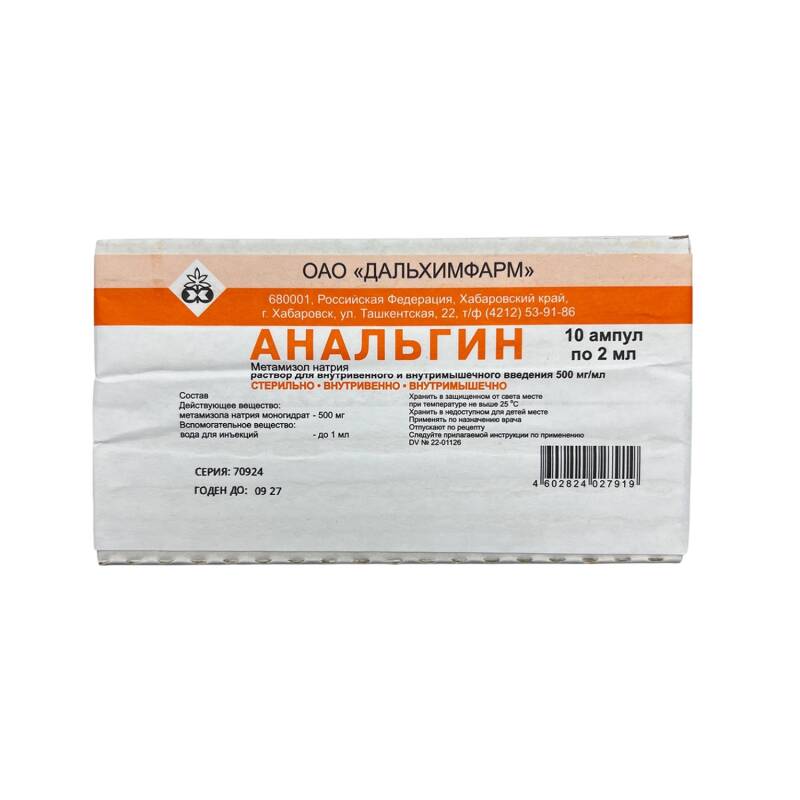
A transient (temporary) decrease in blood pressure may be observed (pharmacologically related vascular disorders: sometimes isolated arterial hypotension may occur and is not accompanied by other manifestations of anaphylactic/anaphylactoid reactions). Rarely, a sudden dose-independent decrease in arterial pressure may be observed during a sharp decrease in blood pressure. Very rarely—skin and subcutaneous tissue disorders: sometimes stable Stevens-Johnson syndrome, toxic epidermal necrolysis (Lyell syndrome), drug dermatitis. Rarely—skin rashes; not known—kidney function disorders. Not known—interstitial nephritis and disorders in the kidneys and urinary excretory pathways: very rarely, in patients with impaired kidney function, a sudden worsening may occur accompanied by oliguria, anuria, and proteinuria (acute renal failure). General disorders: sometimes—red discoloration of urine due to the presence of rubazonic acid in urine. Overdose: decreased excretion/oliguria with acute renal failure (e.g., interstitial nephritis as a result of the development of nephritis), rarer symptoms in the central nervous system (dizziness, drowsiness, tinnitus, confusion, impaired consciousness, coma, seizures) and a sudden decrease in arterial pressure (sometimes progressing to shock), as well as heart rhythm disorders (tachycardia). Respiratory depression. Non-toxic hypothermia during use of excessive doses, dyspnea, acute agranulocytosis, hemorrhagic syndrome. The excretion of the metabolite (rubazonic acid) through the kidneys may cause urine to turn red. A specific antidote is not known. If vomiting occurs within 1–2 hours after use, it is possible to induce vomiting and wash out the stomach contents using a tube. Saline laxatives and activated charcoal should be administered. In case of overdose, accelerated diuresis is indicated. The metabolite (4N-methylaminoantipyrine) can be removed with the help of hemodialysis, and during the development of the syndrome, by intravenous diazepam and rapid hemoperfusion and/or filtration of blood plasma. Barbiturates that have an effect by removing the medicinal product should be administered. Form: 1 ml, 2 ml, or 10 ml solution in neutral glass or breakable point glass ampoules, or class I hydrolytic glass ampoules for intravenous and intramuscular administration with 250 mg/ml or 500 mg/ml. Packed in a cardboard box together with 10 ampoules and the package insert.
5 ampoules are packed in contour blister packs with polyvinyl chloride coating. 2 contour blister packs are packed in a cardboard box together with the package insert. Store at a temperature not exceeding 25°C, protected from light, and out of reach of children. Do not use after the expiry date. Conditions for dispensing from pharmacies: dispensed by prescription. /Holders of registration certificate/receiving organizations: 680001, Russian Federation, JSC “Dalhimfarm”.
Khabarovsk region, Khabarovsk, Taškentskaya str. 22. Tel.:/Fax: (4212) 53-91-86.
Pharmacodynamics. Metamizole sodium, a pyrazolone derivative, non-selectively blocks the cyclooxygenase enzyme and reduces the formation of prostaglandins from arachidonic acid. It has analgesic, antipyretic, and also a certain antispasmodic effect (on smooth muscles and bile ducts). The effect develops after 20–40 minutes, and when administered intravenously, the maximum effect is reached after 20–40 minutes. After intravenous administration, the half-life of metamizole sodium is 14 minutes. The metabolized compound in the liver is 4-N-methylaminoantipyrine (MAA). Other metabolites include 4-N-aminoantipyrine (AA), 4-N-acetylaminoantipyrine (AAA), and 4-N-formylaminoantipyrine (FAA). The last two metabolites are not pharmacologically active. The presence of non-linear pharmacokinetics for metabolites is characteristic. The clinical significance of this phenomenon is unknown. When used for the specified duration, there is no important accumulation of metabolites. Sodium penetrates the placenta. Sodium metabolites enter breast milk. The degree of binding to plasma proteins is 58% for MAA, 48% for AA, 18% for FAA, and 14% for AAA. Excretion occurs mainly through the kidneys; about 96% is excreted through the kidneys in the form of metabolites. When using high doses of sodium, the metabolite of the medicinal product—rubazonic acid—can be excreted through the kidneys, which may cause urine to turn red. In elderly patients, the area under the “concentration-time” curve (AUC) for the medicinal product is increased 2–3 times. In patients with liver cirrhosis, the half-lives of MAA and FAA metabolites are approximately 3 times longer after a single use, while the half-lives of AA and AAA metabolites show similar patterns. It is recommended to avoid the use of high doses of the medicinal product in such patients.
Disorders of renal function. Based on available data, in renal failure, it is recommended to avoid the use of high doses of the medicinal product in patients in whom the excretion rate of some metabolites (AAA and FAA) is reduced.
Use with caution in arterial hypotension (systolic arterial pressure falling below 100 mmHg), decreased circulating blood volume, non-stable hemodynamics (myocardial infarction, multiple injuries, initial stage of shock), initial stage of heart failure, high fever (increased risk of a sharp decrease in arterial pressure). Diseases in which a significant decrease in arterial pressure can be especially dangerous (severe ischemic heart disease and stenosis of cerebral arteries). Chronic alcohol misuse. In cases where asthma is accompanied, in particular, by polypous rhinosinusitis, the risk of developing anaphylactic/anaphylactoid reactions increases: chronic urticaria and other types of atopy; intolerance to alcohol (a reaction even to the use of even small amounts of certain alcoholic beverages, accompanied by the symptoms listed below—itching, increased tear secretion, and severe redness of the facial area); intolerance to dyes (e.g., tartrazine) and/or preservatives (e.g., benzoates) or high sensitivity, as well as severe disorders of renal function (taking into account the possible delay in excretion of metamizole sodium, the use of low doses is recommended).
Cyclosporine. Metamizole sodium may lead to a decrease in the concentration of cyclosporine in blood serum; therefore, during simultaneous use of medicinal products, the concentration of cyclosporine must be monitored. Non-narcotic analgesic medicinal products. Simultaneous use of metamizole sodium and other non-narcotic analgesic medicinal products may lead to mutual potentiation of toxic effects. Antidepressants, oral contraceptives, allopurinol. Tricyclic antidepressants, oral contraceptives, and allopurinol can affect the metabolism of metamizole sodium in the liver and increase its toxicity. Phenylbutazone and other inducers of hepatic microsomal enzymes. Barbiturates, phenylbutazone and other inducers of hepatic microsomal enzymes. When choosing the route of administration of the medicinal product to the body, it should be taken into account that these inducers may weaken the effect of metamizole sodium. Medicinal products and tranquilizers. Sedative medicinal products and tranquilizers. Simultaneous use with chlorpromazine or other phenothiazine derivatives may lead to the development of severe hypothermia.
Medicinal products with a high degree of binding to plasma proteins (oral hypoglycemic medicinal products, indirect-acting anticoagulants, glucocorticosteroids, and indometacin). Metamizole sodium may displace oral hypoglycemic medicinal products, indirect-acting anticoagulants, glucocorticosteroids, and indometacin from their binding to plasma proteins, leading to an increase in their activity. Dormant medicinal products. Additional effects. Unwanted reactions (UR). Unwanted reactions are classified according to system-organ classes in accordance with the MedDRA classification and grouped as shown below according to the World Health Organization classification: very frequent (>1/10,000, <1/1,000), very rare (<1/10,000) and unknown (cannot be assessed based on available data). Leukopenia; very rarely—agranulocytosis (including cases resulting in death), disorders in the blood and lymphatic system: rarely—thrombocytopenia; unknown—aplastic anemia, pancytopenia (including cases resulting in death).
These reactions are of an immunological nature according to their origin, even if no complications were previously noted during repeated use of the medicinal product. Myelotoxic medicinal products may also occur even in cases where metamizole sodium is not hematotoxic, and may be intensified. The addition of metamizole sodium to a regimen with methotrexate, especially in elderly patients, may enhance the hematotoxic effect of methotrexate; therefore, the combination of the indicated medicinal products should be avoided. Sarkolysin increases the risk of developing leukopenia. H2-histamine receptor blockers and propranolol. Codeine, H2-histamine receptor blockers and propranolol may have a potentiating effect on the effects of metamizole sodium. Contrast agents, colloidal blood substitutes, and penicillin. During treatment with metamizole sodium, radiographic contrast agents, colloidal blood substitutes, and penicillin should not be prescribed (increased risk of developing anaphylactic/anaphylactoid reactions).
Acetylsalicylic acid. When used simultaneously with acetylsalicylic acid, metamizole sodium may weaken the effect of acetylsalicylic acid on platelet aggregation. Therefore, during treatment of patients using low doses of acetylsalicylic acid for cardioprotection (prevention of thromboembolism), the combination of the indicated medicinal products should be used with caution. Metamizole sodium may reduce the concentration of bupropion in the blood, which should be taken into account during simultaneous use of metamizole sodium and bupropion. The possibility of incompatibility should be considered: taking into account that metamizole sodium cannot be mixed in the same syringe with other medicinal products. Acids. It is assumed that metamizole sodium at a dose of 4 g/day may reduce the level of valproate (decrease its amount) and exert an effect corresponding to the associated clinical outcome.
This may be related to the probable induction of the CYP2B6 isoenzyme and the enhancement of valproate metabolism. Therefore, during treatment with simultaneous use of metamizole sodium, comprehensive monitoring of valproate levels in blood plasma is recommended. Use during lactation. Metamizole sodium penetrates the placenta.
Product Filters | ||
|---|---|---|
| Supplier Product Code | : | 111-28130 |
 Powered by
T-SOFT
E-Commerce
Powered by
T-SOFT
E-Commerce