English
Azərbaycan
Русский
49 ₼-dən pulsuz çatdırılma
Sifarişimi izlə
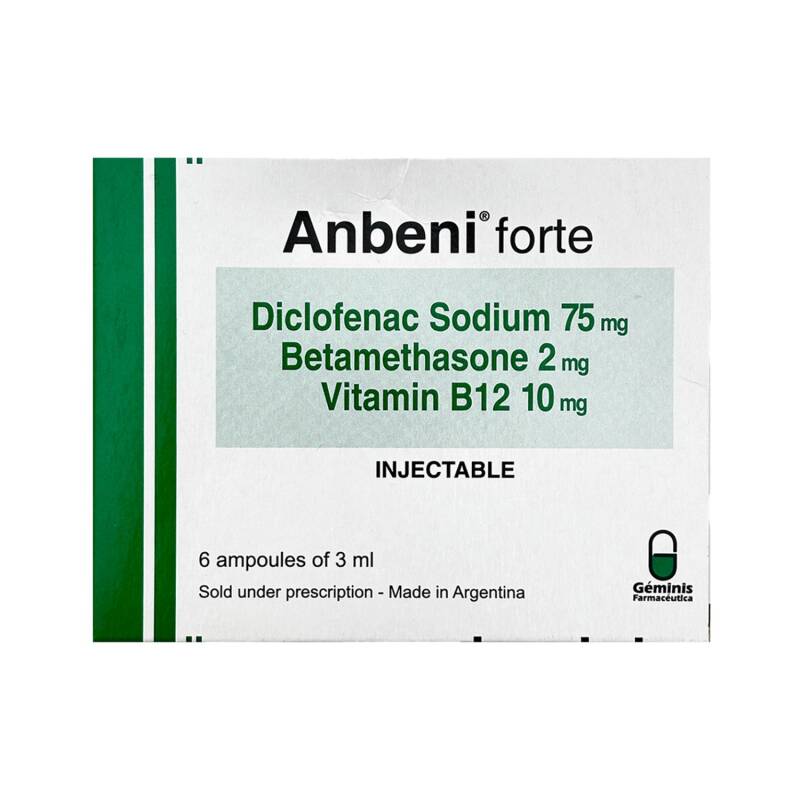
Each ampoule (3 ml) contains 75 mg diclofenac sodium, 2 mg betamethasone (as 2.63 dinatrium phosphate), 10 mg hydroxocobalamin (as 10.36 mg sulfate). Excipients: benzyl alcohol, sodium metabisulfite, propylene glycol, disodium edetate, water for injection, sodium hydroxide. Diclofenac sodium—Diclofenac is a non-steroidal anti-inflammatory drug (NSAID), with strong analgesic and anti-inflammatory effects and a derivative of phenylacetic acid. Its mechanism of action is related to the partial inhibition and elimination of prostaglandin synthesis during the inflammatory process. Diclofenac inhibits the two cyclooxygenase isoenzymes (COX-1 and COX-2) known to date. It has been reported to inhibit the formation of arachidonic acid metabolites, including leukotrienes and 5-hydroxyeicosatetraenoic acid (5-HETE). It may also inhibit the migration of leukocytes, including polymorphonuclear leukocytes, to the site of inflammation, and inhibit platelet aggregation caused by ADP and collagen.
Diclofenac also inhibits the release of lysosomal enzymes from polymorphonuclear leukocytes. It uses a non-opioid mechanism of action at the level associated with a reduction in mediators of nociceptive pathways that block the generation of impulses in the peripheral nervous system. It also increases heat transfer by reducing the activity of prostaglandins in the hypothalamic thermoregulation center and produces an antipyretic effect. Anti-inflammatory steroidal glucocorticoids (cortisone and hydrocortisone) are the main metabolic hormones; synthetic corticosteroids such as betamethasone are used mainly due to their strong anti-inflammatory effect. At high doses, they can weaken the body’s immune response and retain sodium in the body; their metabolic effect is weaker than hydrocortisone’s (vitamin B12). It plays a coenzyme role in various metabolic processes, including fat and carbohydrate metabolism, and in protein synthesis. It has been confirmed by studies that it is necessary for processes such as myelination and nucleoprotein synthesis, as well as for cell division, hematopoiesis, and the metabolism of methionine, folic acid, and malonic acid. It has been shown that high (pharmacological) doses of hydroxocobalamin exert a significant antineuritic effect. Anti-inflammatory steroidal glucocorticoids (cortisone and hydrocortisone) are the main metabolic hormones; synthetic corticosteroids such as betamethasone are used mainly due to their strong anti-inflammatory effect. At high doses, they can weaken the body’s immune response and retain sodium in the body; their metabolic effect is weaker than hydrocortisone’s (vitamin B12). It plays a coenzyme role in various metabolic processes, including fat and carbohydrate metabolism, and in protein synthesis. It has been confirmed by studies that it is necessary for processes such as myelination and nucleoprotein synthesis, as well as for cell division, hematopoiesis, and the metabolism of methionine, folic acid, and malonic acid. It has been confirmed that high (pharmacological) doses of hydroxocobalamin exert a significant antineuritic effect. After an intramuscular injection, diclofenac reaches the maximum concentration in blood plasma 20 minutes later. The area under the concentration-time curve after injection is approximately twice as large as that after oral administration of the same dose.
Diclofenac binds to plasma proteins by more than 99%, and its volume of distribution is 0.12–0.17 l/kg. Two hours after reaching maximum concentration in plasma, the concentration in synovial fluid is higher than in plasma, and this ratio is maintained for 12 hours after administration. The half-life of elimination from synovial fluid is 3–6 hours. Total systemic clearance is 263 ± 56 ml/min. The duration is 1–2 hours. It is metabolized in the liver and excreted mainly in the form of glucuronide and/or sulfate metabolites in urine and bile. Only 1% of the administered dose is excreted as unchanged diclofenac. In urine, it accounts for 5–10%. Less than 5% is excreted via bile. The main metabolite excreted in urine is 4-hydroxy-diclofenac, which accounts for about 40% of total excretion. The other three metabolites (3-hydroxy, 5-hydroxy, 4,5-dihydroxy-diclofenac) account for about 10–20% of the administered dose excreted in urine, and its metabolites are rapidly eliminated: about 40% of the dose is eliminated within the first 12 hours after administration. In individuals, after several uses, the pharmacokinetic parameters of diclofenac remain the same. However, in patients with renal impairment (without clinical significance), the metabolism and kinetics of diclofenac are similar to those in healthy individuals. In patients with impaired accumulation of the drug and/or its metabolites (chronic hepatitis, cirrhosis without portal decompensation), after administration hydroxocobalamin binds to the specific carrier protein transcobalamin. After injection, hydroxocobalamin is completely absorbed and reaches maximum concentration in blood plasma after approximately 1 hour. Three types of transcobalamin have been identified (TC I, TC II, and TC III). The plasma clearance of hydroxocobalamin bound to transcobalamin is rapid. It is stored in the liver in an amount of up to 90% and the main route of excretion is via bile. Two-thirds of it is excreted with bile, and then reabsorbed by the ileum to form an enterohepatic circulation; the remaining part is excreted in feces. Under conditions where hydroxocobalamin excretion in urine is very low due to increased amounts resulting from epithelial desquamation of the gastrointestinal tract and synthesis by intestinal bacteria, the glomerular filtration rate increases gradually with titration.
After intramuscular injection of betamethasone disodium phosphate, therapeutic doses reach maximum concentration in blood plasma after about 60 minutes. Binding to plasma proteins, mainly albumin, is 60–70%. The volume of distribution is 1.4 ± 0.3 l/kg. After oral or parenteral use of disodium phosphate, the half-life from plasma is 5 hours, the biological half-life is 36–54 hours, and renal clearance is 2.9 ± 0.9 ml/min/kg. It is excreted with bile in the form of conjugates with glucuronic acid. The hydrolysis of its esters occurs at the tissue level at the injection site. Like other glucocorticoids, it is metabolized in the liver. Special clinical situations In hepatic impairment and hypothyroidism, glucocorticoid metabolism is significantly slowed, which may enhance the pharmacological effect of betamethasone. This is due to the following: both hypoalbuminemia and hyperbilirubinemia can lead to an undesirable increase in the plasma concentration of unbound fractions. The drug should not be used together with other drugs that may be involved or with other NSAIDs. Considering the possibility of hypersensitivity reactions, appropriate precautions should be taken before use. Accumulation of water and salts in the body and edema: Due to the use of anti-inflammatory drugs, accumulation of water and salts in the body, including edema, has been observed to varying degrees; therefore, caution is recommended especially in patients with a history of cardiac decompensation, hypertension, or other pathologies that may cause accumulation of water and salts in the body. Effect: by the kidneys...
Anbeni Forte is used for the treatment of severe painful inflammatory processes, especially those with signs of neuritis. It is used in the treatment of rheumatic conditions both in and outside the joints, fibromyalgia, myalgia, low back pain, sciatica, and the treatment of physical traumas and strains.
Patients with a history of allergy to any of the active or excipients of the medicinal product; active gastric or intestinal ulcer; severe hepatic and/or renal insufficiency; decompensated heart failure; severe hypertension; patients with asthma accompanied by acute asthma, rhinitis, or urticaria associated with the use of acetylsalicylic acid and/or other prostaglandin synthesis inhibitors; patients with active tuberculosis,
Increases the half-life of glucocorticoids. Plasma clearance is longer in breastfed infants and adults. During lactation, the use of corticosteroids may cause development of infections, accumulation of water and salts in the body, and/or exacerbation of acute acid-peptic conditions of the gastrointestinal tract, and/or the effect of corticosteroid treatment on the gastrointestinal system: Patients with a history of peptic ulcer disease and gastrointestinal bleeding should be under strict supervision. Patients who use diclofenac continuously should be cautious even if there are no existing symptoms typical for the upper gastrointestinal tract, due to the possibility of more serious adverse effects by the gastrointestinal system and the risk of ulceration and perforation. Patients with ulcers or bleeding may be more sensitive. In this age group, changes in liver function: changes may occur in one or more liver tests. It is recommended to monitor the level of glutamate-pyruvate transaminase (QPT) to track whether these laboratory abnormalities progress, remain unchanged, or are transient. In patients with rheumatoid arthritis, an increase in transaminase levels was observed more frequently than in patients. In clinical studies, besides reports of increased enzyme levels in clinical systems, rare cases of more severe liver reactions, including hepatic failure with or without jaundice, have been reported. Based on studies, after starting long-term treatment with diclofenac, transaminase levels should be checked from the fourth to the eighth week. As with NSAIDs, if abnormalities in liver tests remain unchanged or progress, or if relevant signs and/or symptoms of liver diseases develop (e.g., nausea, vomiting, fatigue, itching, jaundice, rash, eosinophilia), treatment should be discontinued as a precaution. Reactions: As with other NSAIDs, they may occur in patients without existing anaphylactoid reactions to the components of the product. This medicinal product should not be used in patients who are allergic to aspirin triad or other NSAIDs.
This symptom complex is usually observed in patients with severe reactions to rhinitis with or without polyps, or in asthma patients in whom severe bronchospasm is observed after taking aspirin or other NSAIDs. It is very necessary in patients. Disease progression: In cases of progression of kidney diseases, treatment with NSAIDs should be initiated only with strict monitoring of the patient’s renal function. In particular, it is necessary to avoid the use of NSAIDs during the last months of pregnancy, because they may cause premature closure of the arterial duct. Precautions: Anbeni Forte contains similar teratogenic effects. In studies on reproductive function in mice (more than 20 mg/kg/day), rats (more than 10 mg/kg/day) and rabbits (80 mg), no teratogenic effects and no toxicity for the mother and/or fetus were detected. Toxicity was not associated with dystocia, prolonged pregnancy, delayed fetal growth, decreased body weight, or decreased fetal survival. It has been shown that it crosses the placental barrier in rats and mice. No adequate studies have been conducted in pregnant women. Because reproductive studies do not always predict human response, this medicinal product should be used only when the potential benefit to the mother outweighs the potential risk to the fetus. The use of synthesis inhibitors creates a risk for the fetus of premature closure of the arterial duct; therefore, it is necessary to avoid the use of diclofenac in the last months of pregnancy. Not suitable for use in pediatrics: In clinical studies, 31% of 6000 patients treated with diclofenac were aged 65 years and older. In these studies, no overall differences were observed between elderly and younger patients in efficacy, additional adverse effects, or pharmacokinetic profile. As with NSAIDs, it is possible that some elderly patients may be more sensitive to adverse reactions.
Children under 12 years of age.
In some patients, especially in elderly patients, mild drowsiness may occur, and therefore caution is required when performing jobs that require special care.
The dose should be determined individually according to medical indications and the patient’s clinical status. Recommended dose: Adults and children over 12 years: intramuscularly once daily, 1–2 ampoules, at the site of discomfort or locally
Pharmacodynamics of the Anbeni Forte preparation
viral diseases, acute glomerulonephritis, acute psychosis, osteoporosis, hepatic porphyria. The pharmacological activity of Diclofenac may reduce fever and inflammation and thus reduce its usefulness as a diagnostic sign in the detection of a disease. Blurredness, visual impairment, scotomas and/or color vision disturbances have been reported. If such complaints occur in the patient while taking it, the use of the medicinal product should be discontinued and the patient should undergo an ophthalmological examination. In patients treated with it, especially during long-term treatment, it is recommended to regularly evaluate hematological parameters to detect anemia or other conditions associated with their use in time. In patients with ulcerative colitis (risk of perforation), renal insufficiency, hypertension, osteoporosis, myasthenia gravis, diabetes, and in patients who have recently undergone intestinal anastomosis, it should be used with caution. In patients, especially in elderly patients, mild drowsiness may occur, and therefore caution is required when performing jobs that require special care.
Patients at high risk of occurrence: In patients with a history of renal insufficiency, heart failure, hepatic dysfunction, treated with diuretics, and generally in elderly patients, rare cases of interstitial nephritis and papillary necrosis have been reported with treatment with Diclofenac. Secondary renal toxicity has been observed in cases such as decreased renal plasma flow or decreased blood volume, where renal prostaglandins play a supportive role in maintaining renal perfusion. In these patients, NSAIDs may cause a dose-dependent decrease in prostaglandin synthesis and a decrease in renal plasma flow, resulting in renal failure and may require discontinuation of treatment for recovery. Significant cases of renal failure have been reported rarely in international clinical studies with no more than 4000 patients, in which serum creatinine levels were strictly monitored.
During intake of diclofenac, only in 11 patients (0.3%) were serum creatinine and urea levels respectively above 2 mg/dL and 40 mg/dL. Since metabolites are mainly excreted in urine, patients treated with diclofenac, especially those with significantly impaired renal function, should be under strict monitoring and doses should be titrated gradually. In patients with porphyria, diclofenac should be avoided, because, as with other NSAIDs, this pathology may occur due to induction of delta-aminolevulinic acid synthase, by Aseptic meningitis 8+osnotoloia Porphyria. Other NSAIDs: As with other NSAIDs, in patients treated with diclofenac, rare cases of aseptic meningitis accompanied by fever and coma have been observed. Although it is more likely to occur in patients with erythema and diseases of connective tissues associated with it, if signs or symptoms of meningitis develop during treatment, the possibility of it being related to diclofenac should be considered. In patients with asthma: In about 10% of asthma patients, aspirin asthma may occur. In patients with aspirin asthma, aspirin use has been associated with episodes of severe bronchospasm. In such sensitive patients, cross-reactions between aspirin and other NSAIDs, including bronchospasm, have been observed; therefore, diclofenac should not be prescribed to patients with this form of sensitivity to aspirin, and it should be used with caution in all patients with a history of asthma. To reduce the risk during intramuscular injection, the following instructions should be considered: Clean the injection site with an antiseptic; follow aseptic rules during the process; inject into the deep layers of the muscle; inject slowly; carefully massage the injection site to allow spreading. Anbeni Forte in therapeutic doses has been reported to be generally well tolerated by patients: Sometimes: incidence rate 1–10%. General abdominal pain, headache, accumulation of water and salts in the body, abdominal distension. System disorders: diarrhea, dyspepsia, nausea, constipation, meteorism, changes in liver function tests.
In less than 3% of cases, peptic ulcer (with or without perforation or bleeding) has been reported. Imbalance: hypokalemia, episodic hypertension and sodium retention in the body with congestive heart failure. Metabolic disorders: menstrual cycle disorders. System disorders: vertigo and subcutaneous tissue disorders: rash, itching. Organ disorders: ear disorders. In rare cases: incidence rate < 1%. General malaise, edema of lips and tongue, photosensitivity, anaphylactoid reactions, and in isolated cases anaphylaxis and edema of the larynx. System disorders: hypertension, congestive heart failure. System disorders: vomiting, jaundice, melena, stomatitis, dryness of mucous membranes, hepatitis, pancreatitis. In cases: injury to the esophagus, liver necrosis, cirrhosis, hepatorenal syndrome, colon disorders: decreased hemoglobin, leukopenia, thrombocytopenia, purpura. In cases: eosinophilia, anemia, neutropenia, agranulocytosis, pancytopenia and metabolic disorders: decreased sensitivity to glucose. In latent diabetes: Cushing’s syndrome, hyposecretion of ACTH, adrenocortical atrophy, delayed growth in children. System disorders: insomnia/drowsiness, depression, agitation, diplopia, irritability. In cases: seizures and aseptic meningitis. System disorders: epistaxis, asthma, laryngeal edema and subcutaneous tissue disorders: alopecia, urticaria, dermatitis, angioedema. In cases: Stevens-Johnson syndrome, erythema multiforme, disorders of the skin. System disorders: blurred vision, scotoma, hearing loss, dysgeusia. Disorders of urinary tract: proteinuria. In cases: nephrotic syndrome, oliguria, papillary necrosis, acute renal failure, interstitial nephritis and connective tissue disorders. In isolated cases: muscle weakness resulting in muscle atrophy, osteoporosis, fractures, local adverse effects observed at the site of aseptic necrosis of the femoral head. After injection: pain, swelling and, in exceptional cases, abscess and necrosis (these two are observed especially in elderly diabetic patients). Information about suspected adverse effects It is important to collect information about suspected adverse effects after authorization of the medicinal product. This allows continuous assessment of the benefit/risk ratio of the medicinal product. Healthcare professionals are asked to report any suspected adverse effects through the national reporting system. By providing information about effects, you help collect more information about the safety of this medicinal product. Information about adverse effects occurring during use of medicinal products should be provided to the Analytical Expertise Center. AZ1065, Republic of Azerbaijan. / Baku city, Jafar Jabbarli street, 34.
/ Fax: (99412) 596-07-16. / Tel.: (99412) 596-05-20. / Hotline: (99412) 596-07-12). / e-mail: [email protected]
Diclofenac with Heparin and oral anticoagulants: Diclofenac may enhance their effect. Methotrexate: Diclofenac may increase the hematological toxicity of methotrexate. Diuretics: Diclofenac may reduce diuretic activity. Sulfonylurea derivatives: Diclofenac may enhance the hypoglycemic effect of sulfonylurea derivatives. Digoxin and/or lithium: Diclofenac may increase plasma concentrations of digoxin and/or lithium. Cyclosporine: Diclofenac may increase the nephrotoxicity of cyclosporine. Aspirin: Concurrent use with aspirin causes a decrease in the bioavailability of both medicinal products. Hydroxocobalamin (vitamin B12) interaction with other medicinal products Alcohol (excessive intake for more than 2 weeks), aminosalicylates, colchicine (especially with aminoglycosides): may reduce absorption of vitamin B12 in the gastrointestinal tract. Antibiotics: Antibiotics may show false low results by affecting the microbiotic test of vitamin B12 in serum and erythrocytes. Folic acid: Long-term intake of folic acid in high doses may reduce the concentration of vitamin B12 in blood. Aspirin: reduces salicylate. Heparin and oral anticoagulants: Betamethasone reduces their anticoagulant effect. Oral contraceptives: Betamethasone may increase the toxicity of corticosteroids. Tricyclic antidepressants: Betamethasone increases the risk of psychopathy. Hormones (estrogens/androgens): there is a risk of edema and increased body weight. Immunosuppressants: increases the risk of opportunistic infections (e.g., tuberculosis). Oral antidiabetic drugs and insulin: hyperglycemia resulting from decreased tolerance to carbohydrates. Antihypertensive drugs: reduced antihypertensive effect due to accumulation of water and salts in the body. Risk of severe diseases with live attenuated vaccines. Alpha-interferon: risk of inhibiting its effect. Enzyme inducers (e.g., rifampicin, carbamazepine, phenobarbital, phenytoin, anticonvulsants such as primidone): Betamethasone may reduce the activity of corticosteroids. Drugs that cause torsades de pointes (antiarrhythmic drugs, e.g., amiodarone, bretylium, disopyramide, quinidine, sotalol, and non-antiarrhythmic drugs, e.g., astemizole, terfenadine, vincamine, pentamidine): severe hypokalemia caused by corticosteroid use may lead to this condition. St. John’s wort preparations: Potential hypokalemia increases the toxic effects of St. John’s wort preparations. Other hypokalemic preparations (some diuretics, some stimulant laxatives): they show additive effects when used together.
Product Filters | ||
|---|---|---|
| Supplier Product Code | : | 111-17619 |
 Powered by
T-SOFT
E-Commerce
Powered by
T-SOFT
E-Commerce