English
Azərbaycan
Русский
49 ₼-dən pulsuz çatdırılma
Sifarişimi izlə
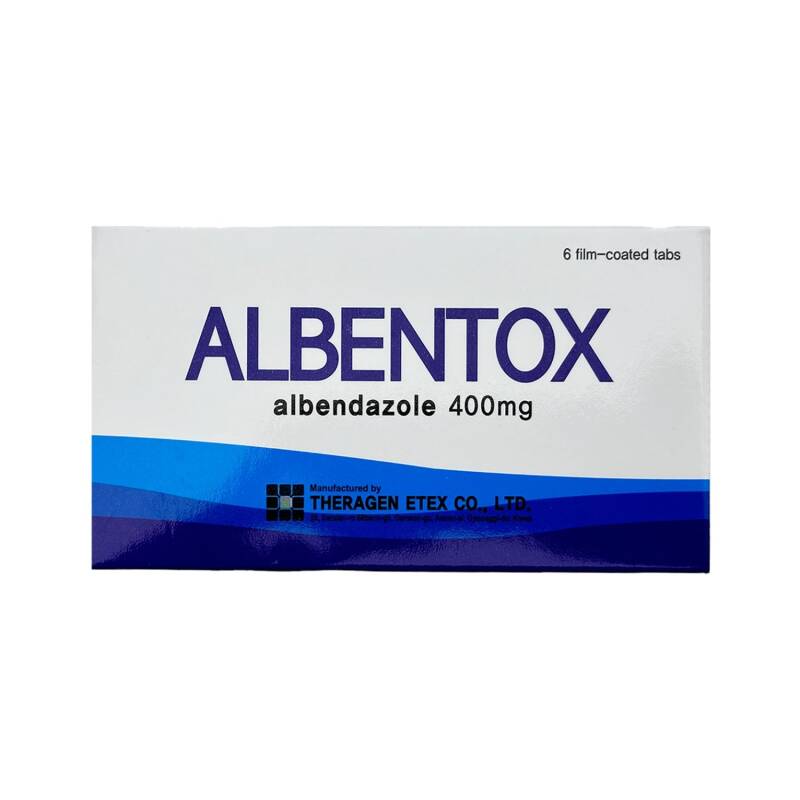
Each tablet contains 400 mg albendazole and FARMAK Azerbaijan
Albendazole is considered effective in the treatment of infections caused by the following intestinal and tissue parasites that are both commonly encountered and, in some cases, rarely encountered: Enterobiasis, ascariasis, hookworm infection, trichuriasis, necatoriasis, strongyloidiasis, taeniasis, hymenolepiasis, clonorchiasis, opisthorchiasis, echinococcosis, cysticercosis.
High sensitivity to albendazole and other benzimidazole derivatives, diseases of the retina of the eye, before planning pregnancy, pregnancy, lactation period.
Albendazole should not be prescribed to women who are breastfeeding and/or are thought to be pregnant. Adequate information regarding its use during lactation in humans or animals is not available.
The effect of albendazole on the ability to drive vehicles and operate dangerous machinery has not been studied; information should be provided to persons who drive vehicles and work with dangerous machinery that dizziness may occur during the intake of albendazole.
There are no special intake rules for the preparation related to food intake; it can be taken by chewing or swallowing with water. Depending on the type of infected parasite, the following dosages are used, taking into account the specific instructions of the treating physician based on laboratory tests and medical history, for children over 2 years of age: Ascariasis (Ascaris Lumbricoides), Enterobiasis (Enterobius vermicularis), Hookworm infection (Ancylostoma doudenale), Trichuriasis (Trichuris trichiura), Necatoriasis (Necator americanus) 1 tablet 400 mg or 2 tablets 200 mg (Strongyloides stercoralis), Taeniasis (Taenia spp.), Hymenolepiasis (Hymenolepis nana), Clonorchiasis (Chlonorchiasis), Opisthorchiasis (Opisthorchia- sis) 1 tablet 400 mg or 2 tablets 200 mg for 3 days (Giardiasis (,, )) 1 tablet 400 mg or 2 tablets 200 mg for 3 days. During these helminth infections, if necessary, the treatment course is repeated after 3 weeks.
For Echinococcosis and cysticercosis, the dose is taken as 400 mg twice daily; for echinococcosis, treatment consists of 3 courses: each period is 28 days, then 3 courses are carried out with a 14-day break; the total treatment duration is 8–30 days. Although a number of clinical studies devoted to its use in pediatric practice have shown that it has the same pharmacokinetics in children and adults, when using it in pediatrics, the child’s body weight and physical condition should be taken into account. The daily dose is taken once or twice, depending on the type of parasite, at 10–15 mg per kg body weight.
Pharmacodynamics Albendazole is a benzimidazole derivative, an antihelminthic medicinal product with a broad spectrum of action. It disrupts the structure of the helminth’s microtubule system and selectively inhibits the synthesis of the beta-tubulin protein; it changes the course of biochemical processes—interferes with glucose utilization and stops the activity of secretory granules of round and flat worms and other motile organelles located in muscle cells. Its individual feature causing destruction is that it has high activity against larval tissues of cestodes and nematodes. Immature parasites and larvae at the 4th stage are sensitive to the drug, and it affects echinococcal cysts. After oral administration, it is well absorbed and metabolized to form the primary metabolite albendazole sulfoxide, which also has antihelminth efficacy. Bioavailability increases when fatty food is taken at the same time. It binds to plasma proteins and is distributed throughout the body (found in cerebrospinal fluid, bile, liver, urine, inside and in the walls of the echinococcal cyst). Albendazole has the ability to pass through the membrane of the echinococcal cyst, where about 1/6 of the plasma concentration accumulates. The half-life of the metabolite is 8–12 hours; metabolites are excreted.
In the early stages of pregnancy, it is necessary to avoid taking Albentox. In women of reproductive age, treatment with this medicine should be started either after a negative pregnancy test result or during the 1st week of menstruation. Because it may weaken the function of the bone marrow, during the 28-day cycle, blood tests should be performed at the beginning of treatment and also every 2 weeks. In patients taking this medicine, an increase in intracranial pressure and seizures may be observed as a result of the development of an inflammatory process associated with the death of parasites. In such cases, anti-seizure medications may be used.
It has been reported that cimetidine, praziquantel, and dexamethasone increase the plasma level of albendazole sulfoxide, the active metabolite responsible for the systemic effect of the albendazole molecule. The clinical significance of the fact that phenytoin, carbamazepine, and phenobarbital may potentially reduce the plasma level of albendazole sulfoxide is unknown, but it may result in decreased efficacy. In particular, during treatment of systemic helminth infections, efficacy should be monitored, and an alternative dose or therapy regimen may be required.
Rarely: headache, dizziness, allergic reactions, Stevens-Johnson syndrome, leukopenia, increased liver enzymes, hepatitis, hair loss (reversible), and gastrointestinal symptoms (abdominal pain, nausea, vomiting, diarrhea). The frequency is determined by the following parameters: very often (≥1/10); often (≥1/100 <1/10), sometimes (≥1/1,000 - <1/100) rarely (≥1/10,000 - <1/1,000); very rarely (<1/10,000); not known (frequency cannot be assessed based on available data). When used in intestinal infections and against migrating skin larvae (short-term and low-dose treatment) Disorders of the immune system Rarely: signs of hypersensitivity: itching, rash, urticaria. Disorders of the nervous system Sometimes: headache, dizziness.
Symptoms of the upper gastrointestinal tract (e.g., epigastric or abdominal pain, nausea, vomiting) and diarrhea disorders Sometimes: gastrointestinal. Hepatobiliary disorders Rarely: increased liver enzymes. Disorders of the skin and subcutaneous tissues Very rarely: erythema multiforme, Stevens-Johnson syndrome. When used in helminth infections (longer treatment duration and higher doses) Disorders of the blood and lymphatic system Sometimes: leukopenia. Very rarely: pancytopenia, aplastic anemia, agranulocytosis. In patients with liver diseases, including hepatic echinococcosis, bone marrow damage is observed more often. Disorders of the immune system Sometimes: signs of hypersensitivity: itching, rash, urticaria.
Disorders of the nervous system Very often: headaches, dizziness. Disorders of the nervous system Often: abdominal pain, nausea, vomiting. Gastrointestinal disorders Disorders observed during treatment of patients with echinococcosis with albendazole. Very often: mild or moderate increase in liver enzymes. Sometimes: hepatitis. Disorders of the skin and subcutaneous tissues Often: reversible alopecia (thinning of hair and moderate hair loss). Very rarely: erythema multiforme, Stevens-Johnson syndrome.
General disorders Often: fever
Product Filters | ||
|---|---|---|
| Supplier Product Code | : | 111-18055 |
 Powered by
T-SOFT
E-Commerce
Powered by
T-SOFT
E-Commerce