English
Azərbaycan
Русский
49 ₼-dən pulsuz çatdırılma
Sifarişimi izlə
Each tablet contains 10 or 25 mg of amitriptyline hydrochloride monohydrate, corn starch, povidone (polyvinylpyrrolidone), silicon dioxide, and magnesium stearate. 10 mg: blue Opadry II 85F20753 colouring substance (polyvinyl alcohol, titanium dioxide (E 171), macrogol PEG 3000, talc, indigo carmine (E 132), Ponceau 4R (E 124), quinoline yellow (E 104)), carnauba wax Grindeks 25 mg: yellow Opadry II 85F22450 colouring substance (polyvinyl alcohol, macrogol PEG 3000, quinoline yellow (E 104), talc, titanium dioxide (E171), “sunset yellow” yellow (E 110), indigo carmine (E 132)), carnauba wax.
Amitriptyline Grindeks tablets are used in the following cases: In adults for the treatment of severe depressive episodes; > In adults for the treatment of neuropathic pain; > In adults for prophylaxis of chronic tension-type headache (chronic tension type headache, XGBA); > In adults for prophylactic treatment of migraine; > In children aged 6 years and older, for the treatment of nocturnal enuresis when there is no organic pathology, including spina bifida and related disorders; in such cases, it is important to seek medical attention immediately—patients with depression may experience a transition of the disease to the manic phase; if a manic phase is observed in the patient, discontinuation of amitriptyline is required. As psychotropic preparations, amitriptyline may change the body’s response to insulin and glucose, which requires correction of anti-diabetic treatment in patients suffering from diabetes. In addition, information has been reported about episodes of hyperpyrexia during the use of tricyclic antidepressants, especially in hot weather, when depressive illness occurs due to changes in the patient’s glucose balance and/or when prescribed simultaneously with neuroleptic medicinal products. When therapy is stopped abruptly after treatment, withdrawal symptoms may occur in the form of headache, weakness, insomnia, and irritability. Amitriptyline should be prescribed with caution to patients using selective serotonin reuptake inhibitors (SSRIs). To exclude the syndrome of QT interval prolongation, ECG monitoring is required before starting treatment.
When enuresis treatment is carried out, it is not allowed to use amitriptyline together with anticholinergic preparations; when used for the treatment of other non-depressive disorders, suicidal thoughts and behavior may occur at the beginning of treatment. When treating patients suffering from enuresis, it is necessary to follow the precautions described for the treatment of patients with depression. When the syndrome is used simultaneously with buprenorphine, it may result in a potentially life-threatening serotonin syndrome; during concomitant treatment, especially at the start of treatment and when increasing the dose, careful monitoring of the patient is recommended. When serotonin syndrome is suspected, depending on the severity of symptoms, dose reduction and/or discontinuation of therapy should be considered. No data have been obtained regarding the effects on children’s and adolescents’ development, sexual maturation, cognitive and behavioral development, and the long-term safety of the medicinal product. The Grindeks medicinal product contains lactose and colouring agents allura red (Ponceau 4R) (E124) and/or yellow “sunset yellow” (E110).
The medicinal product contains lactose. It should not be used in patients with rare inherited disorders such as congenital intolerance, Lapp lactase deficiency, or glucose-galactose malabsorption. It also contains excipients that may cause allergic reactions to the tablets (in the tablets with 10 mg coating—allura red (Ponceau 4R) (E124) and in the tablets with 25 mg coating—yellow “sunset yellow” (E110)).
See section “ ”. Children aged 6–10 years: 10–20 mg per day. In this age group, a more suitable dosage form should be used: Children aged over 11 years: the dose should be increased gradually to 25–50 mg per day. It should be taken 1–1.5 hours before bedtime.
Before starting treatment, the patient’s heart should be examined with an ECG to check for signs of changes in heart rhythm. It is not allowed to stop treatment without discussion. Risky patients: people with liver diseases or those referred to as “slow metabolizers” usually take a smaller dose. The tablets are intended for oral use.
Swallow the tablets with water. It is not allowed to change the dose or stop treatment without consulting a doctor. Depressive episodes: For the treatment of depression, as with other medicinal products used for depression, it may take several weeks until any improvement is felt. The duration of treatment is individual and is usually 6 months; it is determined by the doctor.
The medicinal product should be taken as recommended by the doctor. If treatment is stopped early while the condition can be maintained for a long time, its symptoms may return—pain, prophylaxis of chronic tension-type headache and prophylaxis of migraine treatment. The duration of treatment may require several weeks for any improvement in the patient’s health; consult the doctor and continue use as recommended. For enuresis, the doctor should decide whether to continue treatment after a 3-month course.
Disorders in the bile ducts in the liver: Tvaun папага Sometimes Not known Very often Sometimes Rarely Often Skin and subcutaneous tissue disorders Kidney and urinary tract disorders Reproductive system Often and in the breast Sometimes General and injection site disorders Studies Rarely Often Rarely Very often Often Rarely Liver failure (e.g., cholestatic liver disease) Hepatitis Increased sweating Rash, urticaria, facial oedema Alopecia, photosensitivity Urinary disorders Urinary retention Erectile dysfunction Galactorrhea Gynaecomastia Increased fatigue, feeling of thirst Pyrexia Increase in body weight Pathological electrocardiogram: prolongation of the QT interval in the electrocardiogram, widening of the QRS complex in the electrocardiogram, hyponatraemia Increased intraocular pressure Decrease in body weight, pathological test of liver function, increased levels of alkaline phosphatase and transaminases *Epidemiological studies in patients aged 50 years and older during use of amitriptyline and/or immediately after its use show an increased risk of bone fractures during use of SSRIs. The mechanism by which this risk increases is not known. At the end of the use of the medicinal product, anticholinergic symptoms may occur in newborns, such as irritability, hypertension, tremor, irregular breathing, difficulty swallowing, loud crying, urinary retention, and constipation.
Risk in breastfed infants fed with cow’s milk cannot be excluded. After assessing the benefit/risk ratio for the patient and the child, the decision should be made whether to start/continue/stop breastfeeding (monoamine oxidase inhibitors (non-selective and also selective A (moclobemide) and B (selegiline))—combinations in which there is no risk of developing “serotonin syndrome”). Sympathomimetics: amitriptyline may potentiate the effects of adrenaline, ephedrine, isoprenaline, noradrenaline, phenylephrine and phenylpropanolamine (e.g., those contained in local and general anaesthetics and nasal decongestants). Neuron blockers: during treatment with antidepressants, it is recommended to reconsider the antihypertensive treatment regimen, as tricyclic antidepressants may prevent the antihypertensive effects of quanethidine, betanidine, reserpine, clonidine and methyldopa. Medicinal products: tricyclic antidepressants may potentiate the effects of these medicinal products on the eyes, central nervous system, intestine and urinary bladder. Considering the high risk of paralytic ileus, hyperpyrexia and other conditions, simultaneous use of these medicinal products should be avoided. Medicinal products that cause QT interval prolongation, including antiarrhythmic medicinal products such as quinidine, antihistamines such as astemizole and terfenadine, some antipsychotic medicinal products (especially pimozide and sertindole), cisapride, halofantrine and sotalol—when used together with tricyclic antidepressants, may increase the likelihood of ventricular arrhythmias. When methadone is used at the same time, it is important to follow precautions; it should be taken into account that the above combination may have an additional effect on the QT interval and may increase the risk of serious cardiovascular events.
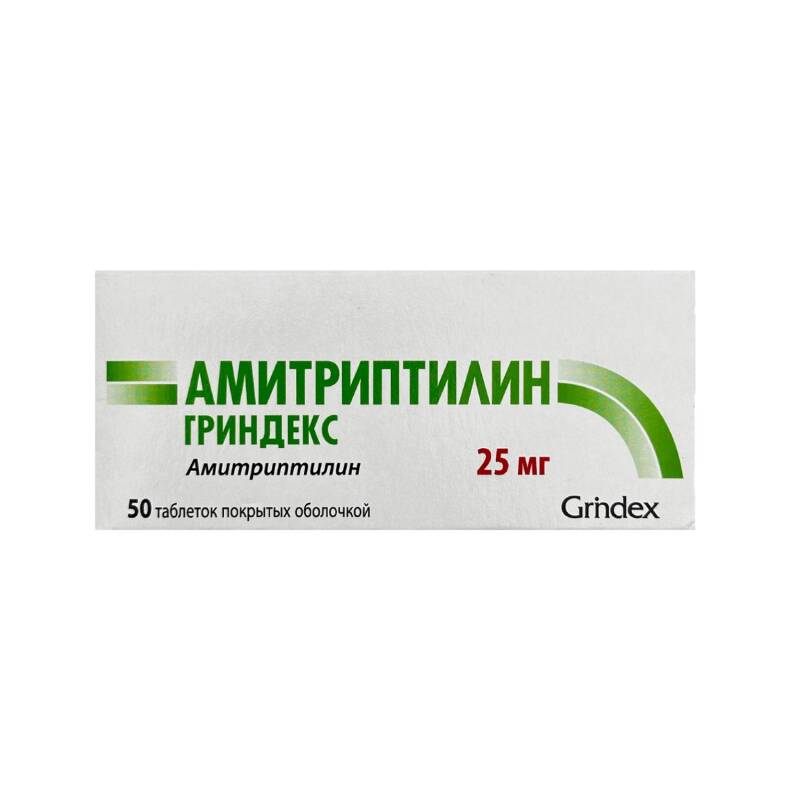
When amitriptyline and diuretics that cause hypokalaemia (e.g., furosemide) are used simultaneously, caution is also required: considering the risk of impaired metabolism of thioridazine (CYP2D6 substrate) and therefore an increased risk of additional cardiac effects, thioridazine and amitriptyline should not be used together. AMITRIPTYLINE GRINDEKS 10 mg, 25 mg coated tablets AMITRIPTYLINE GRINDEKS International non-proprietary name: Amitriptyline. Contraindicated is simultaneous use with high sensitivity to any component of the product, myocardial infarction type block or disorders of heart rhythm, as well as with inhibitors of coronary artery insufficiency (monoamine oxidase inhibitors).
Prescribing MAO inhibitors together with amitriptyline may cause the development of serotonin syndrome (symptoms may include agitation, confusion, tremor, myoclonus and hyperthermia). Treatment with amitriptyline can be started 14 days after stopping the intake of irreversible non-selective MAO inhibitors and at least 1 day after taking moclobemide with reversible effects. It is possible to start amitriptyline after 14 days from discontinuation of the use of inhibitors. Severe illnesses: children under 6 years of age.
If the patient is pregnant, during lactation, or planning pregnancy, the patient should consult a doctor before using this medicinal product. After carefully assessing the benefit/risk ratio, the decision should be made whether taking the medicinal product is necessary, except in cases where the doctor considers it essential.
During treatment, it is necessary to avoid driving and operating other potentially dangerous machinery that requires high attention or rapid psychomotor reactions.
The medicinal product must always be used as prescribed by the doctor. If there is any doubt, consult a doctor. The entire dosing regimen is implemented with the help of any pharmaceutical form/dosage aid; the appropriate pharmaceutical form/dosage should be selected for the dose and for subsequent dose increase. Depressive episodes: Adults. The recommended dose is 25 mg twice daily. Depending on the patient’s response to the product, the doctor may increase the dose gradually, divided into two intakes, up to 150 mg.
Elderly patients over 65 years and patients with cardiovascular diseases: The starting dose is 10–25 mg per day. Depending on the patient’s response to the product, the doctor may increase the dose gradually, divided into two intakes, up to 100 mg. If a daily dose of 100–150 mg is taken, it may be possible to require the doctor to assess the patient’s condition frequently. Adolescents. This medicinal product should not be given to children and adolescents for the purpose of treating depression. For the treatment of pain, prophylaxis of chronic tension-type headache and prophylaxis of migraine treatment. The doctor should choose the dose according to the patient’s symptoms and response to treatment. The recommended starting dose in the evening is 10–25 mg; the recommended daily dose is 25–75 mg.
Depending on the patient’s response to the medicinal product, the doctor may increase the dose gradually. When the dose exceeds 1000 mg per day, it may be necessary for the doctor to assess the patient’s condition frequently. The doctor should instruct whether to divide the dose into 1 intake per day or 2 intakes. Elderly patients over 65 years and patients with cardiovascular diseases: The recommended starting dose in the evening is 10–25 mg, depending on the patient’s response to the product. When the dose is increased gradually and exceeds 75 mg per day, it may be necessary for the doctor to examine the patient. Adolescents: This medicinal product should not be used in children and adolescents for the treatment of neuropathic pain, prophylaxis of chronic tension-type headache and prophylaxis of migraine treatment.
Nocturnal enuresis. Recommended dose in children: up to 6 years: "
If any side effect occurs in the patient, including effects not mentioned in this leaflet, it is necessary to inform the doctor or pharmacist. Providing information about side effects helps ensure broader information about the safety of this medicinal product. Some of the side effects that may occur during the use of other tricyclic antidepressants may include, for example, headache, tremor, impaired concentration, constipation and decreased libido, and usually weaken as depressive condition improves. Use the conditional information from the list below. Classification by organ system and frequency of occurrence: Very common (≥1/10); Common (≥1/100 to <1/10); Occasionally (≥1/1000 to <1/100); Rarely (≥1/10,000 to <1/1000); Very rarely (<1/10,000); Not known (frequency cannot be estimated from available data). Class of organ system (MedDRA): Disorders of blood and lymphatic system; Metabolism and nutrition disorders; Psychiatric disorders; Nervous system disorders; Eye disorders; Ear and labyrinth disorders. Frequency of occurrence: Rarely; Rarely; Not known; Very often; Often; Bone marrow function impairment, agranulocytosis, leukopenia, eosinophilia, thrombocytopenia decrease; Anorexia, increased or decreased blood sugar levels; Aggression; Clouding of consciousness, decreased libido, alertness; Hypomania, mania, agitation, insomnia, night nightmares; Rarely; Delirium (in elderly patients), hallucinations, Not known; Very often; Often; Occasionally; Very rarely; Not known; Very often; Often; Very rarely; suicidal thoughts and/or behavior*; Paranoia; Drowsiness, tremor, dizziness, headache, speech disorders (dysarthria); Impaired ability to concentrate, altered sense of taste, paraesthesia, ataxia; Seizures; Akathisia, polyneuropathy; Extrapyramidal disorders; Impaired accommodation; Mydriasis; Acute glaucoma; Not known; Occasionally; Dry eyes; Tinnitus; Very common disorders of heart function; Common; Rarely; Very rarely; Not known; Disorders in blood vessels: Very common; Respiratory system, thoracic and mediastinal disorders; Gastrointestinal disorders: Occasionally; Not known; Very often; Very rarely; Very often; Occasionally; Rarely; M- dial-11--1 Palpitations, tachycardia; Atrioventricular block, bundle branch block; Collapse, worsening of heart failure; Arrhythmia; Cardiomyopathy, torsades de pointes; Hypersensitive myocarditis; Orthostatic hypotension; Hypotension; Hyperthermia; Nasal congestion; Allergic inflammation of the lungs, respectively alveoli and lung tissue (alveolitis, Leffler’s syndrome); Dry mouth, constipation, nausea; Diarrhoea, vomiting, swelling of the tongue; Swelling of the salivary gland, paralytic ileus; Reduced sedative effect. Absorption: After oral administration of the 50 mg dose, it determines that the maximum level in blood serum is reached after approximately 4 hours (Tmax 3.89±1.87 hours, range 1.93–7.98 hours).
After oral use of the medicinal product at a dose of 50 mg, the mean C value is 30.95–19.61 ng/ml; range 10.85–5.70 ng/ml (111.57+34.64 nmol/l, range 39.06–164.52 nmol/l). The mean absolute oral bioavailability is 53% (Fab 0.527+0.123, range 0.219–0.756). The apparent volume of distribution (V) determined after intravenous administration is 1221–280 litres, range 769–17021 (16+3 1/kg). Binding to plasma proteins is approximately 95%. Amitriptyline and nortriptyline enter breast milk in small amounts in mothers who breastfeed; the concentration ratio in breast milk/blood serum is approximately 1:1. The effect calculated for the breastfed infant during the period (amitriptyline + nortriptyline) is about 2% of the corresponding maternal doses (mg/kg). In vitro, metabolism of amitriptyline mainly involves demethylation (CYP2C19, CYP3A4) and hydroxylation (CYP2D6) and, in the future, conjugation with glucuronic acid; other enzymes involved are CYP1A2 and CYP2C9 isoenzymes.
At this time, metabolism depends on genetically determined polymorphism. The main metabolite is nortriptyline, a secondary amine; it is a stronger inhibitor of reuptake of noradrenaline than serotonin. In turn, metabolites such as cis- and trans-10-hydroxyamitriptyline and cis- and trans-10-hydroxyamitriptyline have similar effects to nortriptyline on reuptake of both neurotransmitters, but with a significantly weaker profile. N-oxide amitriptyline is present in blood plasma only in small amounts. The latter metabolite is almost inactive and, compared with nortriptyline, all metabolites have lower anticholinergic activity. The total concentration of 10-hydroxynortriptyline in blood plasma predominates, but most metabolites have undergone conjugation. After oral administration, the half-life (T12 B) of amitriptyline is approximately 25 hours (24.65±6.11 hours, range 16.49–40.36 hours). Systemic clearance (Cls) is 39.24±10.18 1/hour, range 24.53–53.73 1/hour. Excretion unchanged via the kidneys is not significant (approximately 2%). In most patients, stable total plasma levels of amitriptyline + nortriptyline are achieved within 1 week, and after treatment with the use of ordinary tablets 3 times a day, stable levels of amitriptyline and nortriptyline in plasma are achieved, with approximately the same distribution throughout the day. Due to lower intensity of metabolism, in elderly patients longer half-life and lower values of internal clearance (CI) have been determined. Liver failure: liver failure may limit liver metabolism, leading to an increase in the amount of medicinal product in blood plasma, and for these patients the dosage should be selected with caution.
Renal impairment: Does renal impairment affect the kinetics of the medicinal product? The metabolism of the medicinal product depends on genetic polymorphism (CYP2D6 and CYP2C19) / pharmacodynamic ratio. The concentrations of amitriptyline and nortriptyline in blood plasma differ greatly among different patients and no usual correlation with therapeutic response has been established. During depression, the therapeutic concentration of the medicinal product in blood plasma is approximately 80–200 ng/ml (~280–700 nmol/l) (amitriptyline + nortriptyline). Levels above 300–400 ng/ml are associated with an increased risk of impaired cardiac conduction, for example widening of the QRS complex or atrioventricular block.
Pharmacodynamics. Mechanism of action: Amitriptyline is a tricyclic antidepressant and analgesic with significant anticholinergic and sedative properties. This, in turn, enhances the effect of monoamine neurotransmitters in the brain by preventing their reuptake and thus inactivation—specifically, preventing the reuptake of noradrenaline and serotonin at nerve endings. This is related to antidepressant activity. The mechanism of action also includes the effect of blocking ion channels on sodium, potassium and NMDA channels at both the central and spinal cord levels. These are mechanisms associated with the reduction of pain, and are not related to its antidepressant properties.
Tricyclic antidepressants (TCAs) show varying degrees of similarity with muscarinic and H1 histamine receptors; effectiveness and safety of amitriptyline when used in adults for the indications listed below: severe depressive episode; neuropathic pain; prophylaxis of chronic tension-type headaches associated with tension; effectiveness and safety of migraine prophylaxis. During treatment of nocturnal enuresis in children over 6 years of age, the recommended doses are shown in the “How to use and dosage” section. For patients suffering from depression, for the treatment of depression, this medicinal product can be used only in inpatient settings at doses up to 200 mg per day, and in some cases up to 300 mg per day. After 2–4 weeks, > When all other types of treatment, including with or without the use of antispasmodic medicinal products and medicinal products related to vasopressin, do not respond and are excluded.
This medicinal product can be prescribed only by a healthcare professional who has knowledge of permanent enuresis control.
When using high doses of the medicinal product, the likelihood of developing disorders of heart rhythm and severe arterial hypotension increases. This is also possible in patients suffering from existing heart diseases, even when using usual doses. QT interval prolongation: During the post-marketing period, cases of QT interval prolongation and arrhythmias have been reported. It is recommended to follow precautions when using amitriptyline simultaneously with medicinal products that cause bradycardia, decompensated heart failure, or QT interval prolongation. Imbalance (hypokalaemia, hyperkalaemia, hypomagnesaemia) is known as a condition that increases the risk of proarrhythmias. When anaesthetics are used during treatment with tetracyclic antidepressants and this may increase the risk of arrhythmias and arterial hypotension, amitriptyline should be discontinued several days before surgery. If urgent surgery is required, it is mandatory to inform the anaesthesiologist about treatment with amitriptyline. When prescribing amitriptyline to patients suffering from conditions resembling thyroid disease or using medicinal products that affect the thyroid gland, special caution is required. Patients are particularly exposed to the risk of orthostatic hypotension. In patients with disorders such as urinary retention, hypertrophy of the prostate gland, hyperthyroidism, amitriptyline should be prescribed with caution. In patients with rare conditions such as small depth of the anterior chamber and narrow angle, acute glaucoma attacks may be provoked due to dilation of the pupils. / suicidal thoughts: Depression is associated with an increased risk of suicidal thoughts, self-harm and suicide (cases related to suicide). Until remission is achieved, this risk is present. After the start, improvement of the condition may not be observed during the first few weeks or even longer. Therefore, it is important to ensure comprehensive monitoring of patients’ conditions until significant remission is achieved. Clinical experience confirms that suicidal risk may increase in the early stages of recovery.
It is known that in patients with a history of suicidal attempts or prominent suicidal thoughts before starting treatment, there is a high risk of suicidal thoughts or suicide, and therefore it is necessary to closely monitor the condition of those patients during the course of treatment. In meta-analyses of placebo-controlled clinical trials conducted to study psychiatric disorders in adult patients using antidepressants, it has been shown that compared with placebo, in patients under 25 years of age using antidepressants, the risk of suicidal behavior increases. When using it, especially at the beginning of treatment and when the dose is changed, patients—especially those in the high-risk group—should be carefully monitored (and their guardians should be informed) that for the purpose of timely detection of clinical deterioration, suicidal behavior or suicidal thoughts and unusual behavioral disorders, monitoring the patient’s condition and observing the appearance of symptoms in the body may occur.
Product Filters | ||
|---|---|---|
| Supplier Product Code | : | 111-17201 |
 Powered by
T-SOFT
E-Commerce
Powered by
T-SOFT
E-Commerce