Cholesterol test: preparation, levels and results

•
Author: Qalib Zakiroğlu
•
Publish Time: 10.11.2026
•
Reading Time: 11 Minute
Cholesterol test: preparation, levels and results

A cholesterol test helps assess cardiovascular risk. Preparation is not the same for everyone: fasting is often unnecessary, and you should not stop medicines on your own. What matters is your lipid profile and personal risk factors, rather than a single number.

What is a cholesterol test and why is it done?

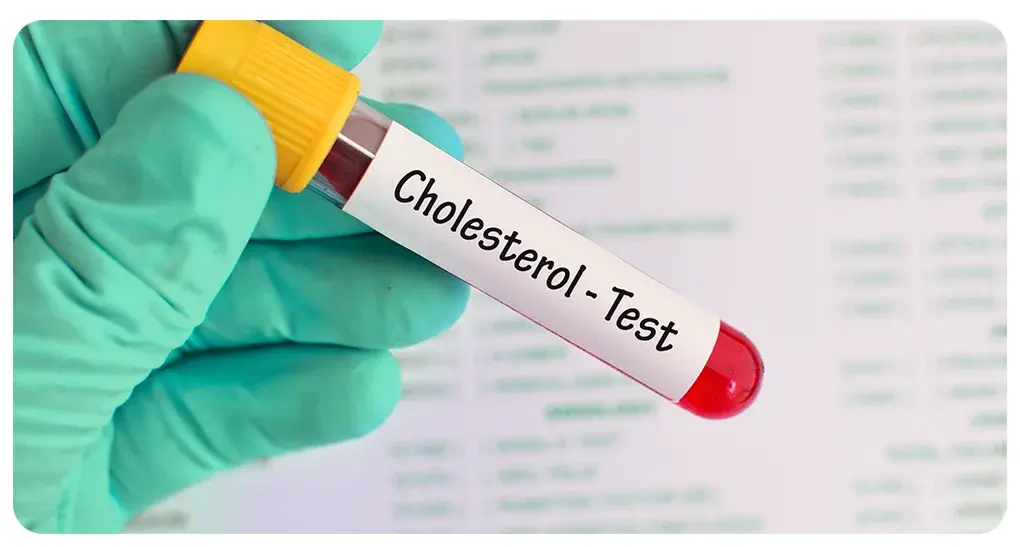
A cholesterol test measures lipids in your blood. Cholesterol is needed for cells and hormones, but high levels of certain lipoproteins, particularly LDL, can increase the risk of vascular disease. High cholesterol often causes no symptoms, so feeling well is not enough to know your level. [1, 2]

Testing is used both to assess risk initially and to monitor the effects of dietary changes and treatment. One high result does not prove that an artery is blocked; it needs to be interpreted alongside overall cardiovascular risk.

Total cholesterol versus a lipid profile

Total cholesterol gives one overall number. A lipid panel, or lipid profile, provides more detail. Understanding the abbreviations on your report can help you discuss the results with your doctor.

Main measurements in a lipid profile
MeasurementWhat does it mean?
Total cholesterol — TC, CholThe total amount of cholesterol in the blood
LDL — low-density lipoproteinA measurement associated with atherosclerosis risk when elevated
HDL — high-density lipoproteinA fraction involved in transporting cholesterol
Triglycerides — TGBlood fats involved in energy storage
Non-HDL cholesterolTotal cholesterol minus HDL cholesterol

VLDL and the atherogenic index are not included in every laboratory’s standard panel. The atherogenic index alone is insufficient for treatment decisions. LDL may be labelled “calculated”; in some cases it is measured directly. [1, 3]

Who should have a cholesterol test?

The timing depends on age, family history and risk factors. Discuss testing with your doctor, especially if you have a family history of early heart attack, stroke or high cholesterol, or if you have diabetes, high blood pressure, smoke or are overweight.

A strict rule such as “no more than once every five years after age 25” is incorrect. Some people at low risk may have several years between tests; those at higher risk or receiving treatment may need closer monitoring. Agree on the next test date based on previous results and your treatment plan. [1, 3]

How to prepare for a cholesterol test

Preparation depends on the test ordered and the laboratory. When arranging it, ask whether fasting is needed and how to take your morning medicines.

  • Keep your usual eating pattern; do not start a sudden diet to make the result look better.
  • If fasting is requested, follow the laboratory’s specified interval, often 8–12 hours.
  • Usually only plain water is allowed during fasting. Follow the laboratory’s instructions about sweetened drinks, coffee and tea.
  • Check preparation instructions about alcohol, strenuous exercise and smoking in advance.
  • Sit quietly for a few minutes before the blood draw and bring previous results.

If you have diabetes, are pregnant or find fasting difficult, agree on the appointment time and medicine plan beforehand. Also mention any recent illness or change in medicines. [3, 4]

Do you always need to fast?

Not always. Many people can have an initial cholesterol test without fasting. A fasting sample may be requested to clarify triglyceride levels or when other tests are being done at the same time. A blanket recommendation to fast for 12–14 hours is therefore inappropriate. [2]

If you have eaten before the test, tell the staff. The laboratory can decide whether to take the sample or reschedule. When comparing results, it helps to know whether the earlier sample was also taken fasting.

How to read the results and reference levels

First check the units: results may be reported in mmol/L or mg/dL. Then look at LDL, HDL and triglycerides alongside total cholesterol. A laboratory reference interval is not the same as your individual treatment target.

General guide values for adults
Measurementmg/dLApproximate mmol/L
Total cholesterolBelow 200Below 5.2
LDLBelow 100Below 2.6
Non-HDLBelow 130Below 3.4
HDL — levels considered lowBelow 40 in men; below 50 in womenBelow 1.0 in men; below 1.3 in women

This table is not a set of personal treatment targets and is not intended for children. People with cardiovascular disease or high risk may need a lower LDL target. High HDL does not automatically cancel out the risk associated with LDL. [1, 3]

To convert cholesterol from mg/dL to mmol/L, divide by approximately 38.67. Triglycerides use a different conversion factor; do not apply the same calculation to them.

What to do if cholesterol is high

Show your doctor the result along with previous tests and your current treatment. Blood pressure, diabetes, smoking and family history help determine the next step. Repeat testing or further investigations may sometimes be needed. [3]

  • Include vegetables, pulses and fibre-rich foods in your diet; discuss reducing saturated fat.
  • Increase physical activity in a way that suits your health.
  • Get support to stop smoking.
  • If medicine is prescribed, follow the instructions and monitoring schedule.

Supplements do not automatically replace prescribed treatment. In particular, tell your doctor before combining red yeast rice products with medicines. A product being described as “natural” does not make it suitable for everyone.

A single low result does not automatically diagnose liver, thyroid or another disease either. Low LDL during treatment may be an intended outcome; the clinical context determines its interpretation.

Frequently asked questions

Can I drink water before a cholesterol test?

Plain water is usually allowed during a fasting blood test. Follow any specific instructions provided by your laboratory.

Should I stop my statin before the test?

No, do not stop it on your own. A monitoring test may have been ordered to check how well treatment is working.

Can LDL be high when total cholesterol is normal?

Yes. The total does not show every detail of the lipid profile. LDL and other fractions need to be assessed separately.

How many hours should I fast for a cholesterol test?

When fasting is requested, it is often for 8–12 hours. Many initial tests do not require fasting; confirm the interval with the laboratory.

When will my results be ready?

Timing varies by laboratory and test panel. Ask when the results will be available and how to access them when giving your sample.

Can symptoms tell me if my cholesterol is high?

High cholesterol often has no symptoms. A blood test measures the level, while a medical assessment helps determine your risk.

Are high triglycerides the same as high cholesterol?

No. They are different lipid measurements. Both may contribute to risk assessment, but the same numerical thresholds do not apply.

Sources

  1. MedlinePlus — Cholesterol testing and levels
  2. NHS — Cholesterol testing and fasting
  3. CDC — Cholesterol testing and risk assessment
  4. MedlinePlus — Fasting for a blood test
Related reading: Benefits of fish oil (in Azerbaijani) →
Share
T-Soft 360 Logo Powered by T-SOFT E-Commerce